

Most chimney leak repairs in Dallas take one to three hours. The full picture depends on what is leaking and where.
A flashing reseal or chimney cap swap is a same-day job. A deteriorated crown or failed mortar joints can stretch to a full day, sometimes two, once materials cure. Below, we break down each repair type and what drives the timeline.
Learn more about chimney repointing Dallas in Plano, TX →
Learn more about smoke chamber repair Dallas in Dallas, TX →
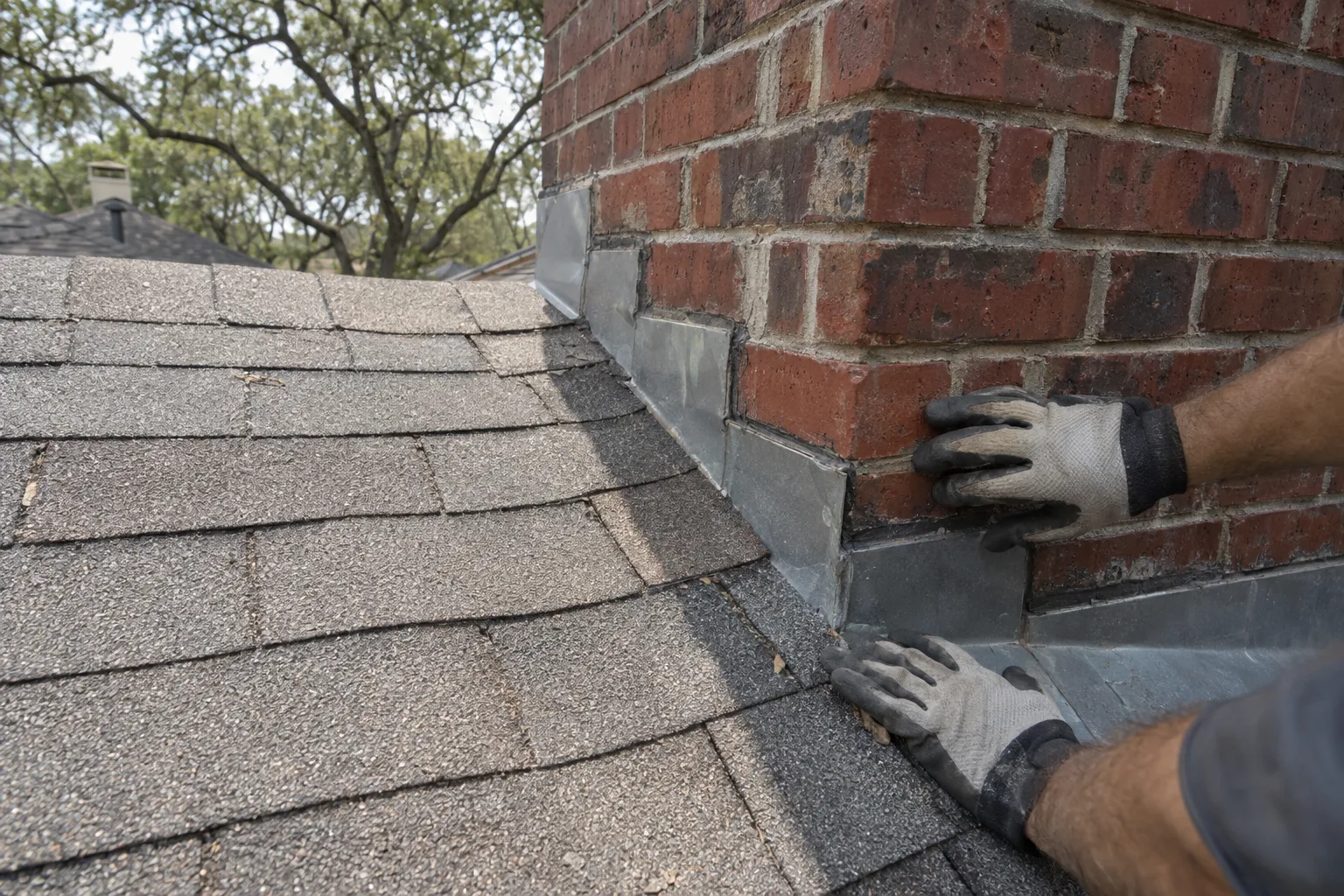
Chimney leak source diagnosis starts on the roof and inside the firebox.
Here is exactly what the work involves for the most common leak repairs, and what can extend the job beyond the initial estimate.
Resealing existing flashing takes about one to two hours. The technician removes old sealant, cleans both surfaces, applies new chimney-specific caulk or mastic, and checks the step and counter-flashing integration. This works when the metal itself is intact but the seal has dried out.
Full flashing replacement means pulling off the counter-flashing embedded in the mortar joints, weaving new step flashing with the roof shingles, and setting new counter-flashing. That is a 2-4 hour job and often requires a roofer and a chimney tech to coordinate. Wondering whether to do it yourself? Read our breakdown of DIY vs. professional flashing repair in Dallas.
Small crown cracks, under a quarter inch, can be filled with a penetrating crown sealer in one visit. The sealant flexes slightly with thermal movement, which pure concrete cannot do, so it holds up better in the Dallas heat cycle.
Crowns with large cracks, missing sections, or improper slope require a full rebuild. The old crown is demolished and a new one formed with a mix designed for the chimney's dimensions. It needs at least 24 hours of cure time before rain contact. Plan for a two-day job or accept that the chimney stays covered until a second visit confirms cure. For the full picture, see our crown rebuild guide.
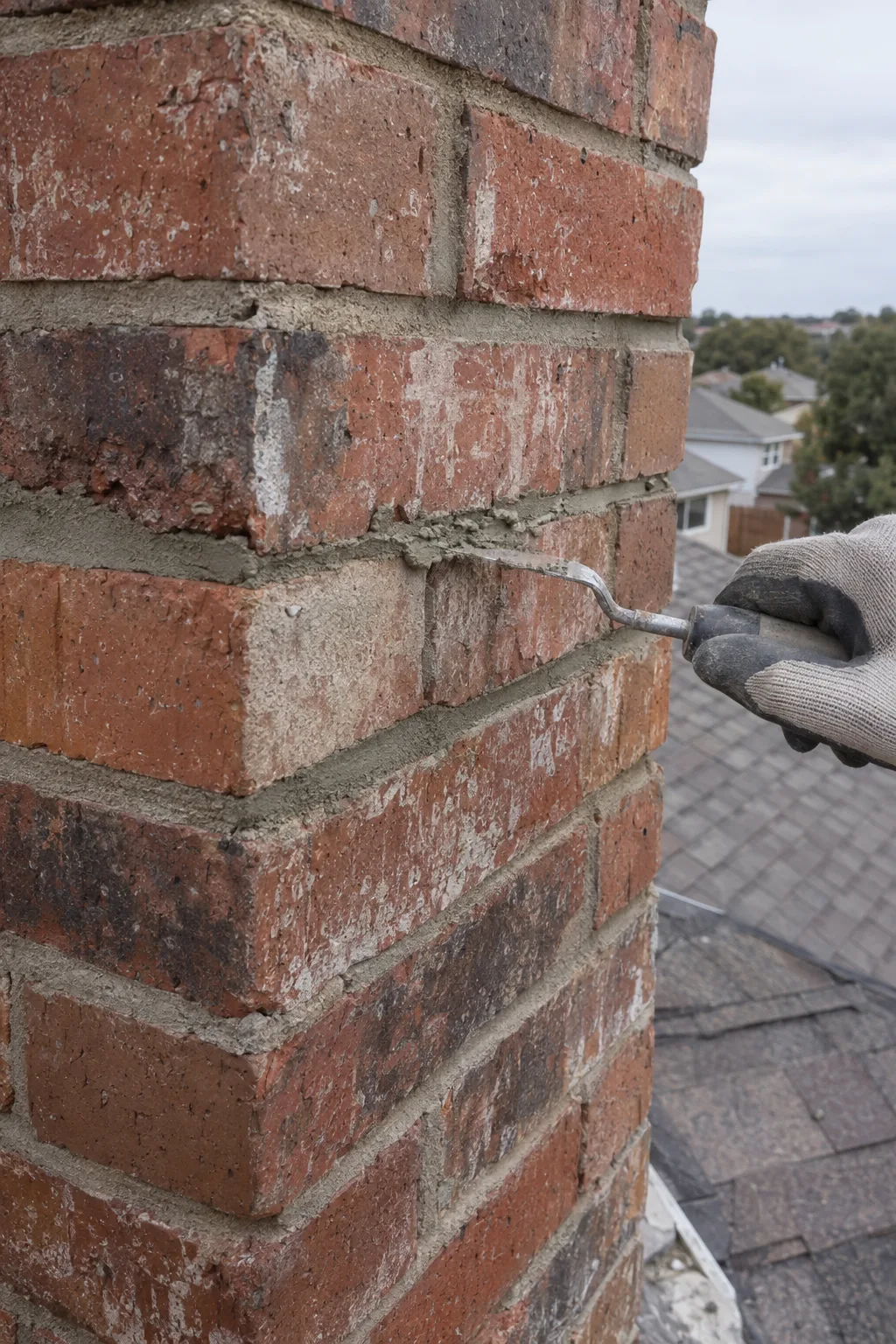
Repointing is skilled, slow work. The tech grinds or chisels out degraded mortar to a depth of about three-quarters of an inch, vacuums the joint, wets the brick to slow suction, and packs new mortar in two or three lifts. Rushing produces shrinkage cracks.
A full chimney with four exposed sides can take a full day. The new mortar needs 28 days to reach full strength, though it can tolerate light rain after 24 hours. Waterproofing over the repaired surface is a separate visit, typically scheduled one to two weeks later. Learn more about what to expect during masonry chimney repair in Dallas.
The fastest leak fix on the list. A tech measures the flue tile or liner diameter, retrieves the correct cap from stock or a supplier, and installs it with screws or set bolts. Most cap installations take 30 to 60 minutes once on the roof. If the flue tile itself is cracked at the top, plan for an additional 30 to 60 minutes of tile repair before the cap goes on.
Waterproofing is not a repair on its own -- it is the last step after other repairs are solid. A vapor-permeable masonry sealer is applied in two coats on dry brick. The second coat goes on while the first is still tacky, typically 30-60 minutes later. Total application time runs one to two hours. The surface stays off-limits to rain for 24 hours. Check the 2026 Dallas waterproofing cost guide for pricing context.
If water is getting into the home through liner cracks, that is a bigger job. Clay tile liners that are cracked or shifted need either targeted tile replacement or a full reline with a stainless steel insert. Either option runs most of a day and may require interior access at multiple levels. Read about how Dallas homeowners choose between clay liner repair vs. switching to stainless.
Several factors push a chimney leak repair from a half-day to a multi-day project. The most common ones in the Dallas area:
The EPA's indoor air quality guidelines note that persistent moisture intrusion promotes mold growth. A leaking chimney that soaks structural wood over months can push air quality and structural issues well beyond the chimney itself.
You cannot accurately quote a leak repair without a proper inspection. Any contractor who quotes remotely based on your description alone is guessing. The source of a chimney leak is almost always invisible from the ground and sometimes invisible from the roof without probing the mortar and flashing.
A Level 2 inspection, which includes a camera scan of the flue interior, gives the clearest picture before repair work begins. If you are dealing with a newer leak and no prior damage history, a Level 1 visual inspection may be enough. See our comparison of Level 1 vs. Level 2 chimney inspections for Dallas homes.
For pricing reference, see our 2026 Dallas chimney inspection cost guide. Many companies apply the inspection cost toward the repair if you book both together.
Fix the leak source, then address the symptoms. Water stains on firebox brick are cosmetic and can be cleaned during a subsequent chimney sweep. Damaged smoke chamber parging sometimes follows a chronic crown leak -- that is a separate repair. See smoke chamber repair questions answered.
Once the chimney is dry and sealed, a full chimney cleaning removes any debris that washed in during the leak period. The NFPA 211 standard calls for annual inspections and cleaning as needed -- good practice regardless of whether you have had a leak.
If the leak left water in the firebox, check for firebox damage before the next fire season. Saturated refractory panels and deteriorated firebox mortar are fire safety issues, not just cosmetic ones. Read about fireplace repair mistakes to avoid in Dallas before doing any DIY work inside the firebox.
Not if water has reached the firebox or smoke chamber. Burning a fire while there is active moisture in the refractory can cause spalling and damage the firebox panels further. Wait until the repair is confirmed complete and the chimney has had 24-48 hours to dry.
For sealant-based work, the surface needs to be visibly dry -- typically 24 to 48 hours after rain stops in summer, longer in cooler weather. Flashing replacement can proceed sooner because it does not depend on surface bonding. A good technician will check surface moisture before applying any product.
Not always. Repairs address the structural defect. Waterproofing is a preventive coating applied over intact masonry. Many homeowners add it at the same service visit to avoid a separate trip, but it should not be applied over damaged or wet brick. Confirm with the technician whether conditions allow same-day waterproofing.
Yes, in the sense that the entry point is sealed. But interior staining from previous water intrusion will remain until cleaned. You will need rain -- or at minimum a garden hose test -- to confirm the repair held. Most technicians do a hose test before leaving when conditions allow.
It depends on the cause. Sudden storm damage, like a cap blown off or flashing damaged by a falling branch, is often covered. Gradual deterioration from lack of maintenance is typically excluded. Document the damage with photos before repairs start and contact your insurer before the work begins.
Ask for photos before and after, especially of any work done at roof level or inside the flue. A contractor who uses a camera for inspection should share that footage. Written documentation of what was found and what was repaired gives you a record if a follow-up visit is needed. If your tech will not provide either, that is a red flag.
Safe Flue handles chimney leak repairs across the Dallas-Fort Worth metro. If you are outside central Dallas, see our dedicated service pages for your city: