

Most Dallas homeowners don't know their chimney needs repair until something visible fails. Spalled bricks, crumbling mortar, or a damaged crown are usually years in the making. Here's exactly what the repair process looks like, step by step.
Safe Flue Chimney Sweep and Repair is a full-service chimney company based in Dallas, TX. We handle everything from annual sweeps and Level 1 inspections to crown rebuilds and full chimney masonry restoration.
Learn more about Chimney Sweep Services in Saginaw →
Learn more about firebox repair Dallas in Richardson, TX →
Learn more about chimney rebuild Dallas TX in Carrollton, TX →
Learn more about chimney inspection Dallas in Arlington, TX →
Learn more about custom fireplace Dallas in Irving, TX →
Learn more about chimney cleaning dallas →
Learn more about firebox repair Dallas in Mesquite, TX →
Learn more about chimney repair Dallas TX →
Learn more about chimney rebuild Dallas TX in Garland, TX →
Learn more about firebox repair Dallas in Allen, TX →
Learn more about gas chimney inspection Dallas →
Learn more about chimney repointing Dallas in Plano, TX →
Learn more about smoke chamber repair Dallas in Dallas, TX →
Dallas weather is hard on masonry. Triple-digit summers bake the mortar dry. Winter cold fronts cause the brick to expand and contract. That thermal cycling is the main reason Dallas chimneys deteriorate faster than chimneys in more temperate climates.
We work on wood-burning fireplaces, gas inserts, prefab units, and exterior chimneys with no connected firebox. If it has a flue, we service it. Our repair work covers chimney sweeping, tuckpointing, crown repair, flashing repair, cap installation, and complete chimney rebuilds when the damage has gone too far for patching.
Every job starts with a proper inspection. We won't quote repair work based on a phone description alone because what looks like a simple mortar issue often involves water damage deeper in the structure.
Every chimney repair follows the same basic sequence. Knowing each step helps you ask the right questions and understand what you're paying for.
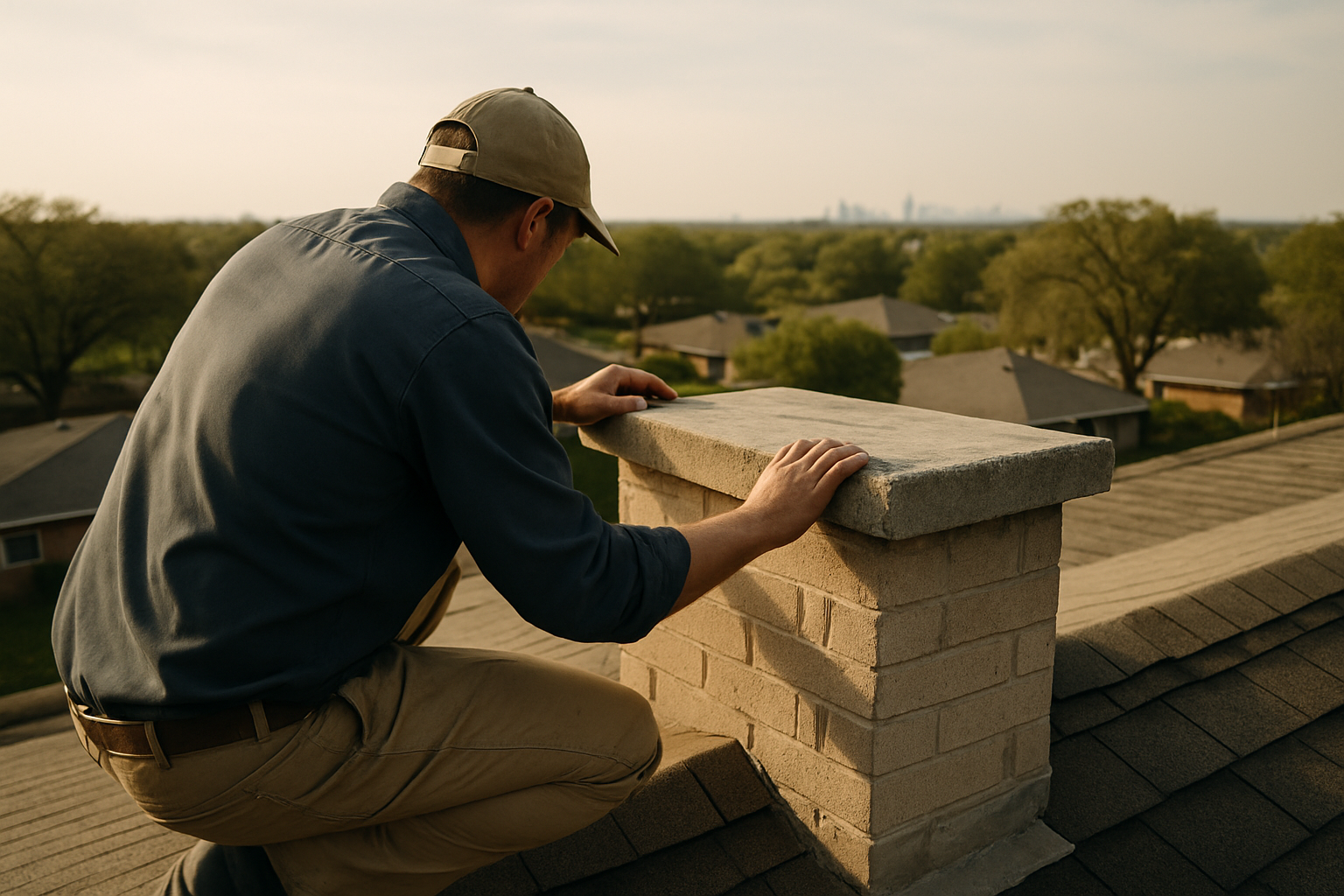
Repair work starts with a proper look at what's actually wrong. That means a Level 1 inspection at minimum, which covers the visible exterior, the firebox, and the accessible flue. If there's been a chimney fire, a real estate transaction, or signs of structural damage, you'll need a Level 2 inspection with camera documentation.
The inspection determines scope. Without it, you're guessing. A crown that looks cracked from the ground might have rebar corrosion underneath pushing the concrete apart. Camera inspection catches that before you spend money patching the surface.
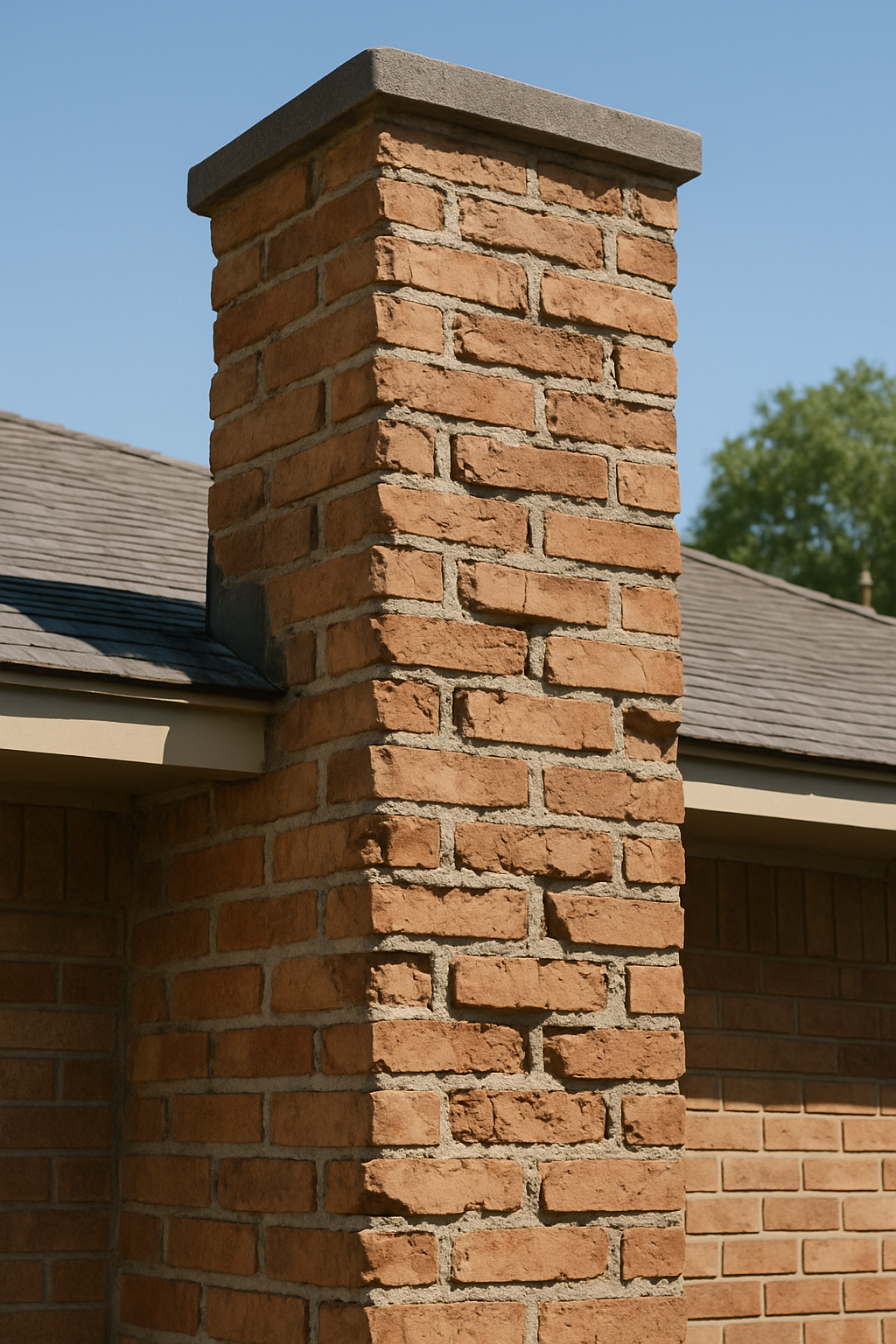
This is the most common masonry repair we do in Dallas. Over time, the mortar between bricks erodes. When the joints open up, water gets in. Once water gets in, freeze-thaw cycles (yes, Dallas does freeze) make the gaps bigger every winter.
Tuckpointing means grinding out the deteriorated mortar to a depth of at least 3/4 inch, then packing in fresh mortar that matches the original composition. The match matters. Using a harder portland-heavy mix on an older chimney built with softer lime mortar causes the bricks themselves to crack instead of the joint. The joint is supposed to be the sacrificial layer.
A standard tuckpointing job on a single-story Dallas chimney takes most of a day. A two-story chimney or one with widespread deterioration across all four faces takes longer and may require scaffolding.
The crown is the concrete cap that seals the top of the chimney around the flue. It's the first thing to take a hit from hailstorms, and Dallas gets a lot of hail. Cracks in the crown let water run straight into the chimney structure.
Small cracks get sealed with a flexible elastomeric crown coat. Larger structural breaks, or crowns that have crumbled significantly, get demolished and recast. A properly built crown slopes away from the flue toward the edges so water sheds off cleanly instead of pooling. Many original builder-grade crowns aren't sloped correctly, which is why we often rebuild them thicker and with the right overhang.
After any crown work, we recommend adding a chimney cap if one isn't already in place. It's the simplest way to keep water, animals, and debris out of the flue. See why Dallas summer storms make chimney caps particularly important.
Flashing is the metal seal between the chimney and the roof. It's one of the top causes of attic water damage in Dallas homes, and most homeowners assume a roof leak is a roofing problem when it's actually the flashing separating from the chimney.
We replace failed step flashing and counter flashing, properly embed the counter flashing into the mortar joint, and seal it. This isn't caulk over old metal. Done right, it means removing the old flashing material and installing new metal with the correct overlap and embedment depth.
Spalling is when the face of the brick pops off, leaving a rough, pitted surface. It happens when water soaks into the brick and then freezes. Once a brick spalls, it absorbs moisture faster than an intact brick, so the problem spreads if left alone.
Individual spalled bricks get cut out and replaced with matching brick. Getting a close match in an older Dallas neighborhood isn't always straightforward since brick styles change. We source from salvage yards when we can to keep the repair from looking patchy. After replacement, the entire chimney exterior benefits from a vapor-permeable waterproofing treatment that lets the masonry breathe while blocking liquid water.
The liner keeps combustion gases inside the flue and out of your living space. Clay tile liners crack from chimney fires and from the normal thermal stress of heating and cooling. Gas appliances vent acidic flue gases that deteriorate clay faster than wood smoke does.
Small cracks in an otherwise sound clay liner can sometimes be addressed with a poured or spray-applied resurfacing product. Widespread cracking or a liner that has deteriorated significantly means replacement. The choice between repairing the clay liner or relining with stainless steel depends on the chimney's age, the fuel type, and the extent of damage.
For most gas appliance conversions and for any chimney that's had a confirmed flue fire, we recommend stainless relining. It's more predictable long-term and sized correctly for the appliance's BTU output, which clay liners often are not after a fuel change.
When damage is concentrated above the roofline, a partial rebuild is often the right call. The chimney section above the roof is the most exposed and usually deteriorates fastest. We can tear down that section to the roofline and rebuild it in new brick, properly tied into the existing structure.
A full chimney rebuild is necessary when the structure below the roofline has been compromised by water, the firebox masonry is failing, or the original construction was inadequate. Full rebuilds are multi-day projects and require the firebox and hearth to be reconstructed to current NFPA 211 standards. We document everything with photos before, during, and after so you know exactly what was replaced and why.
Some of these are obvious from the ground. Others only show up during an inspection. If you notice any of the following, don't wait until fall to schedule a visit.
The National Fire Protection Association's NFPA 211 standard specifies that chimneys, fireplaces, and venting systems should be inspected at least once a year. That's not a sales pitch. It's the same standard that fire departments and insurance companies reference.
The NFPA and the Chimney Safety Institute of America both recommend annual inspections regardless of how often you use the fireplace. A chimney that hasn't been used can have animal nesting, water damage, or liner deterioration just as easily as one used every winter.
See our full breakdown of what chimney inspections cost in Dallas and what's included at each level.
From a basic annual sweep to a full chimney rebuild, we handle every part of the job. You don't need to coordinate multiple contractors.
Creosote removal for wood-burning fireplaces. Debris and animal nesting cleared from gas flues. Wood-burning fireplaces producing more than a cord per season should be swept at least once a year. Learn more in our chimney cleaning frequency guide.
Sweeping cost guide →Level 1 and Level 2 inspections with camera documentation. Required for home sales, after chimney fires, and when changing fuel types. We provide a written report with photos for every Level 2 job.
L1 vs L2 guide →Tuckpointing, crown repair and replacement, spalled brick replacement, and structural chimney rebuilds. We match existing brick and mortar composition to keep the repair consistent with the original chimney.
Clay liner resurfacing, partial liner repair, and full stainless steel relining for gas and wood-burning systems. Liner sizing is matched to the specific appliance, not just the original flue opening.
Vapor-permeable sealant application to protect masonry from water infiltration without trapping moisture inside the brick. Particularly relevant after any masonry repair or tuckpointing work.
Waterproofing cost guide →Chimney cap supply and installation, top-mount damper replacement, firebox repair and smoke chamber parging. Prefab fireplaces inspected and serviced. Gas insert and log set assessments.
Wood-burning fireplace used regularly: sweep and inspect every year, ideally before the heating season starts in October. Gas fireplace: inspect every 1 to 2 years even if you don't burn wood, since the liner and connections still require visual verification. Read the full breakdown in our Dallas chimney sweep guide.
Hairline crown cracks that are shallow and not actively admitting water can often wait until a scheduled visit. We'll tell you when something is urgent and when it can be monitored. You don't need to panic over every imperfection.
Chimney height, accessibility, the extent of damage, brick sourcing, and whether scaffolding is required all affect price significantly. A simple mortar joint repair on a one-story chimney is a very different project from tuckpointing a two-story chimney with damaged bricks on three faces. We provide written quotes after inspection, not over the phone.
Using a hard Type S or Type N mortar on an older chimney built with soft lime mortar causes bricks to crack, not the joints. The joint is supposed to fail first because it's cheaper to repair than bricks. A contractor who doesn't ask about the chimney's age or test the existing mortar before quoting tuckpointing is skipping a critical step.
Fresh mortar and new brick are porous. Applying a penetrating, vapor-permeable water repellent after masonry work lets the masonry breathe while blocking liquid infiltration. Regular silicone-based sealants trap moisture and eventually cause the same damage they were meant to prevent. The product and application method both matter.
The right starting point is an inspection, not a repair quote. Call us and we'll schedule a time to take a proper look. We service all of Dallas and the surrounding DFW area.
© 2026 Safe Flue Chimney Sweep And Repair. Dallas, TX. All rights reserved.