

Most fireplace repairs fail before they start. The wrong patch material, the skipped inspection, the DIY liner job. Safe Flue has seen every shortcut. Here is what actually works.
Most chimney problems in Dallas do not announce themselves. A hairline crack in the firebox. A small gap where the flashing meets the roofline. Mortar that has lost its grip but still looks solid from the outside. By the time smoke backs up into your living room or water stains appear on the ceiling, the damage is already well underway.
Learn more about chimney repair Dallas TX →
Learn more about chimney rebuild Dallas TX in Garland, TX →
Learn more about firebox repair Dallas in Allen, TX →
Learn more about gas chimney inspection Dallas →
Learn more about chimney repointing Dallas in Plano, TX →
Learn more about smoke chamber repair Dallas in Dallas, TX →
Safe Flue Chimney Sweep And Repair works across the Dallas-Fort Worth area, handling everything from routine annual sweeps to full chimney rebuilds. That full-service scope matters. When one technician can sweep, inspect, repair, and waterproof in the same visit, nothing gets missed and nothing gets handed off.
Texas heat does specific things to masonry that colder climates never see. The freeze-thaw cycles are mild here, but sustained triple-digit summers drive moisture out of mortar fast. Combined with the clay soils that shift under foundations, Dallas chimneys age differently than chimneys in other regions. You need someone who works these conditions every week, not someone applying generic advice from a national manual.
If you are reading this before your first fireplace use of the season, or because you noticed something that does not look right, call (214) 441-6336. A direct conversation is faster than guessing.
We serve Dallas proper and the surrounding DFW communities including Richardson, Wylie, Rockwall, Rowlett, Southlake, University Park, The Colony, and dozens more.
☎ (214) 441-6336 →These are the most common errors Safe Flue encounters on repair calls across Dallas. Knowing them helps you avoid expensive callbacks.
Patching a firebox without a camera inspection first is like painting over rust. The visible damage is rarely the whole picture. A crack in the firebox wall often traces back to a broken flue tile or a shifting smoke chamber. Repair the surface without finding the root cause and the same crack reopens within one or two burning seasons. A Level 2 inspection with camera shows exactly what is happening inside the flue before any repair work starts.
Standard Portland cement mortar is not rated for the heat inside a firebox. Fireplace refractory mortar and regular masonry mortar look identical in a bucket but behave completely differently at 1,000 degrees Fahrenheit. Using standard mortar on firebox joints causes premature crumbling, and the fix requires removing the incorrect material before starting over. Refractory mortar is specifically formulated to handle repeated thermal cycling. See what proper masonry chimney repair in Dallas actually involves, including material selection.
Waterproofing only works on a clean, dry surface. Applying sealant over existing moisture or algae growth traps water inside the masonry, which accelerates spalling rather than preventing it. Most chimney waterproofing failures trace back to surface prep, not product quality. The masonry needs to be dry for at least 24 to 48 hours after any cleaning before sealant goes on. Check our guide to chimney waterproofing costs in Dallas to understand what a proper job includes.
Wood-burning fireplaces that sat unused through Dallas summers often have creosote that has hardened or shifted during the heat. Third-degree glazed creosote will not brush out with a standard sweep. It needs chemical treatment first. Lighting a fire in a creosote-loaded flue is the most direct path to a chimney fire. Learn to identify the creosote warning signs you can spot from your living room before the season starts.
Clay tile liners with multiple broken sections are not good candidates for patching. Individual tile replacement is appropriate when the rest of the liner is sound. But if tiles are cracked through multiple sections, patching gives a false sense of security. A broken liner allows combustion gases to reach combustible framing materials, which is a structural fire risk. The decision between patching clay and installing stainless is worth understanding in full. Read the breakdown on choosing between clay liner repair and stainless relining for Dallas homes.
Gas appliances produce far less creosote than wood, but the flue still collects debris, bird nests, and moisture. Burner components corrode. Thermocouples fail. Pilot assemblies get coated in dust. A gas fireplace that lights fine today can develop a carbon monoxide issue with no visible warning signs. Annual service catches these problems before they become dangerous. See the full comparison of how often to clean a chimney for wood-burning versus gas fireplaces in Dallas.
Partial repairs cost less upfront but can cost more overall if the structural damage exceeds what a partial fix can address. Tuckpointing and crown repair are the right call when the chimney body is still sound. But when the structure above the roofline is leaning, the brick is spalling in large sections, or the flashing is failing repeatedly, a full rebuild above the roofline is often the more cost-effective path over five years. Understand the real trade-offs in our guide to partial versus full chimney rebuilds for Dallas homes.
The smoke chamber sits directly above the firebox, and it is one of the most overlooked spaces in a chimney. Soot packed into the smoke shelf does not burn off. It sits there, holds moisture, and smells through the summer. Back-puffing, where smoke rolls into the room instead of up the flue, is frequently a smoke chamber issue. A parging repair to the smoke chamber walls can often resolve chronic smoking problems that multiple damper adjustments failed to fix. Learn what soot stains, back-puffing, and odors say about your smoke chamber.
Sustained triple-digit summers accelerate mortar deterioration faster than freeze-thaw cycles do. Dallas chimneys need different care than those in colder climates.
DFW sits on expansive clay that shifts with moisture changes. This ground movement transfers directly to your chimney foundation and the masonry above it.
Dallas summer storms knock off caps and damage crowns regularly. A missing cap lets water, animals, and debris straight into your flue before the season even starts.
You do not need to be a chimney professional to notice the signs that something is wrong. A few minutes of observation from inside and outside your home can give you useful information before you call.
From inside the house: look at the firebox walls for cracks wider than a credit card, white mineral deposits on the firebrick (efflorescence signals moisture intrusion), and dark staining above the firebox opening that was not there before. If you can smell the fireplace without a fire burning, that odor is often creosote or mold in the smoke chamber.
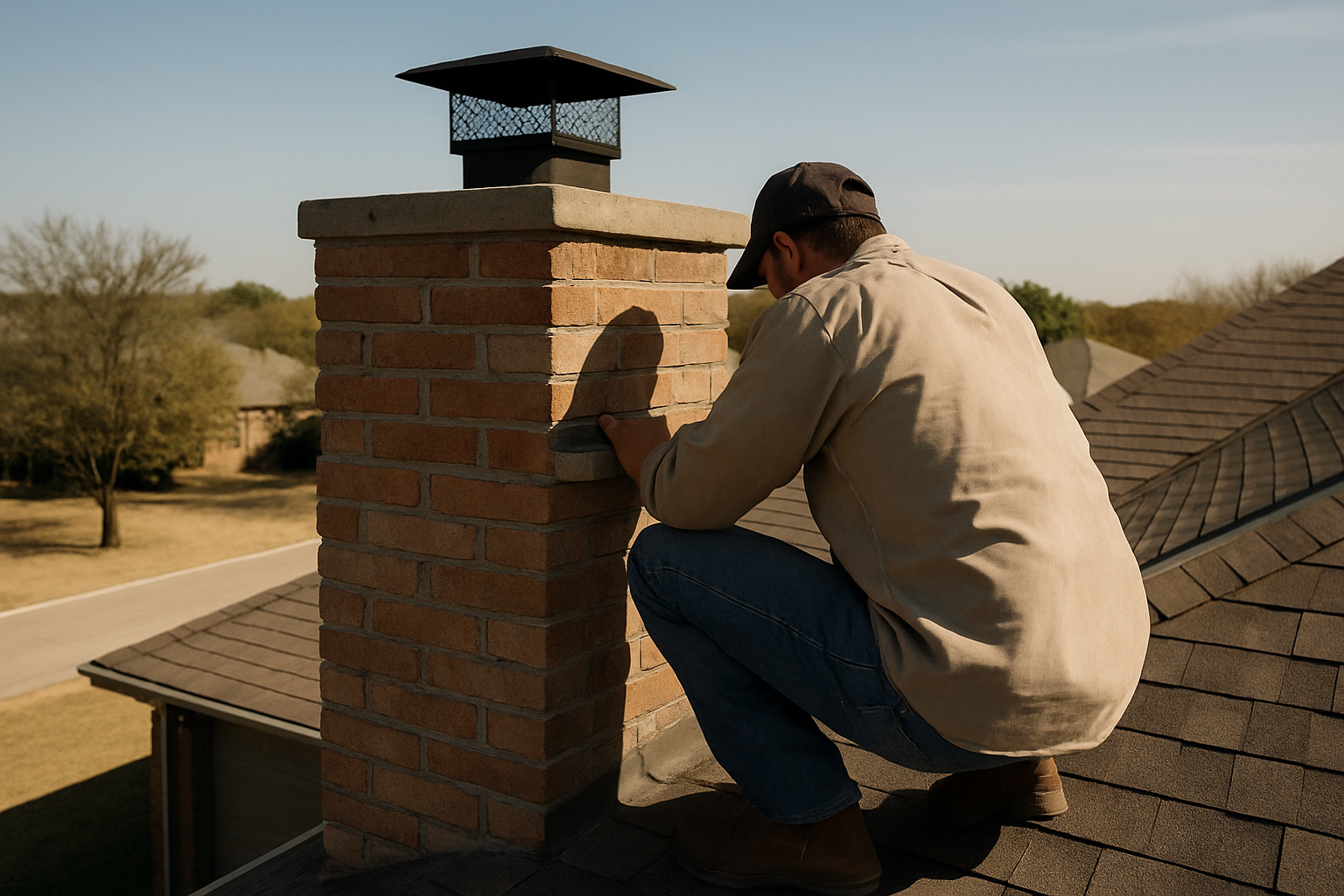
From outside: look at the mortar between bricks on the chimney body. If you can press mortar out with your finger, it is failing. Check the crown, the sloped concrete cap at the very top, for cracks. Look for missing flashing at the roofline. A chimney cap that is tilted or missing entirely needs immediate attention, especially before rain. Read more about why Dallas summer storms matter for your chimney cap.
If you are a buyer doing due diligence, check out our fireplace inspection checklist for home buyers before closing. Chimney issues discovered after closing become your cost to fix.
Chimney work in the U.S. follows standards published by the National Fire Protection Association (NFPA) and the Chimney Safety Institute of America (CSIA). These standards define what constitutes an adequate inspection, proper liner sizing, and safe clearances to combustibles.
☎ Call (214) 441-6336NFPA 211 is the standard that governs solid-fuel appliances, venting systems, and related construction. It specifies minimum clearances, liner requirements, and when a system must be repaired or taken out of service. A technician working to this standard is not making judgment calls on the fly. They are applying documented safety criteria. When you read an inspection report that says your liner needs replacement, that recommendation should reference measurable damage thresholds, not opinion.
A Level 1 inspection covers accessible portions of the chimney exterior, interior, and basic appliance connection. It is appropriate for a system that has not changed and has been used normally. A Level 2 inspection adds video scanning of the flue interior and is required any time you change the appliance, sell the home, or have experienced a chimney fire or severe weather event. Most Dallas homeowners who call asking about "just a cleaning" actually need a Level 2 because their system has not been professionally assessed in years. See the full breakdown of Level 1 versus Level 2 chimney inspections for Dallas homes.
A cracked crown that costs a few hundred dollars to repair becomes a several-thousand-dollar liner replacement if left through two more wet seasons. Repointing that runs a few hundred for minor tuckpointing becomes a partial rebuild at a significantly higher cost if the brickwork continues to deteriorate. Chimney repairs almost universally cost more the longer they are deferred. Check current price ranges in our 2026 guide to chimney inspection costs in Dallas and our 2026 guide to chimney sweeping costs in Dallas.
If your wood-burning fireplace has sustained liner damage or if you simply want lower maintenance, a gas insert is a legitimate alternative to full liner repair. Inserts come with their own stainless venting liner and eliminate the creosote concern entirely. The installation involves sizing the unit to the firebox, running the liner, and setting up gas supply. It is a half-day to full-day job in most cases. See what fireplace insert installation in Dallas and Frisco involves before making that decision.
The NFPA recommends annual inspection and cleaning of all chimneys. For wood-burning systems, the Chimney Safety Institute of America echoes this, noting that even a single cord of firewood can deposit enough creosote to require professional cleaning. In Dallas, the burning season typically runs from November through March. Scheduling a sweep before the season starts, not after, is the right call because it means the flue is confirmed clean before the first fire. Get the full breakdown in our complete guide to chimney sweeping in Dallas, TX.
Safe Flue serves homeowners throughout DFW. Find your city below.
Whether you need a pre-season sweep, a repair estimate, or a full assessment before winter, Safe Flue handles the entire job from inspection through final repair.
Most inspections and sweeps take 2 to 4 hours. Repair scope depends on what we find, and we explain everything before any work begins.