

Building an outdoor fireplace in Dallas is more involved than most homeowners expect. The wrong foundation, the wrong materials, or a skipped inspection can turn a backyard feature into a fire hazard or a pile of crumbling masonry within a few seasons. Here is what to watch out for before you break ground.
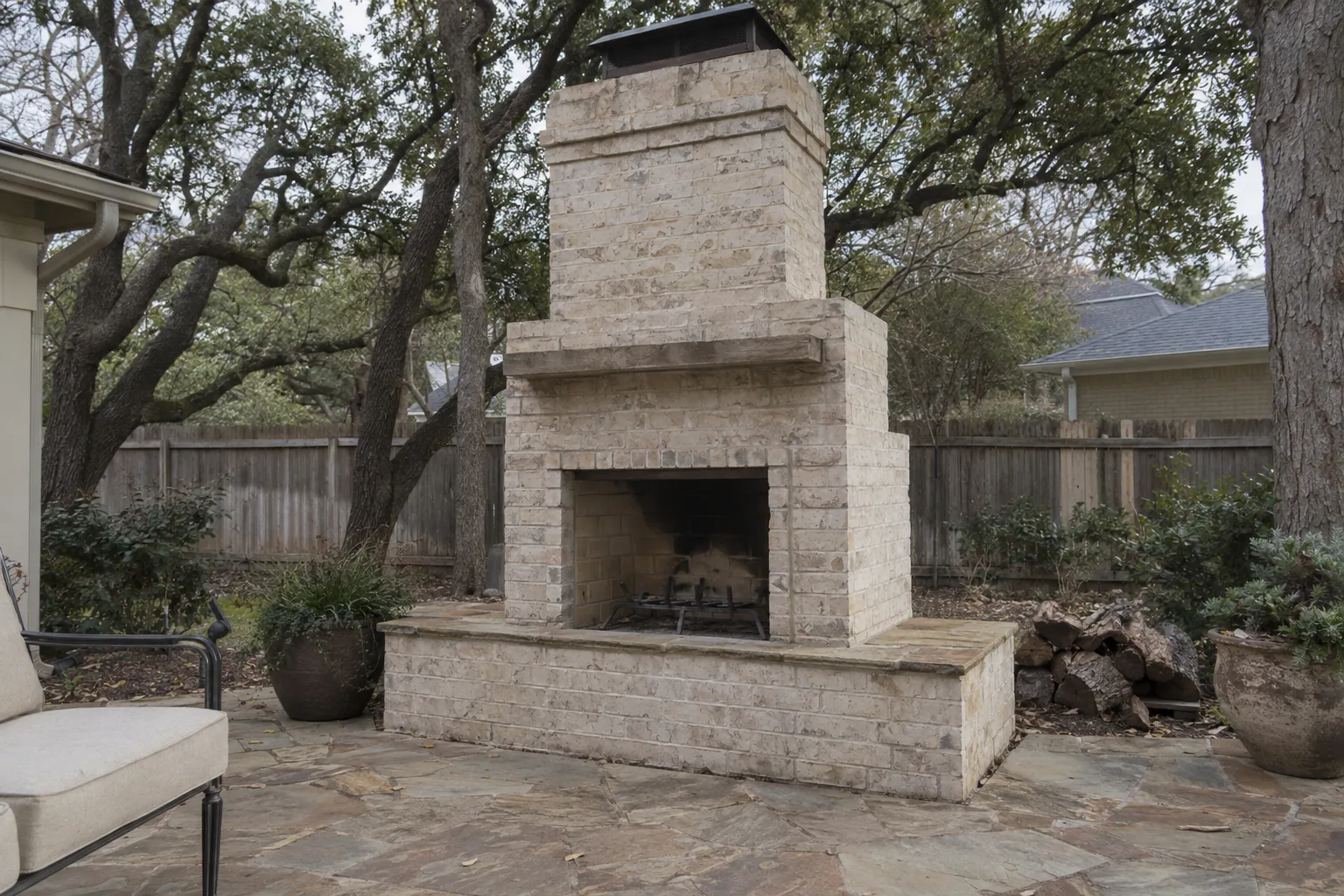
These are the issues we see most often when homeowners call us to fix an outdoor fireplace built by someone else, or one they tried to build themselves.
Dallas clay soil expands when wet and contracts when dry. An outdoor fireplace typically weighs several thousand pounds. Without an independent concrete footing poured below the frost line and sized for that load, the structure shifts. Mortar joints crack. The firebox separates from the surround. We see this most often with fireplaces built on a standard patio slab, which is not designed to carry that weight independently.
The footing depth and thickness depend on the fireplace's total mass and your lot's soil composition. A proper build requires a site assessment, not a one-size formula. Skipping this step is the single most expensive mistake a Dallas homeowner can make with an outdoor fireplace.
Related: Chimney Repair Dallas TX Common Mistakes →Standard red brick is rated for indoor use. Outdoor fireplaces need firebrick in the firebox and weather-rated masonry on the exterior. Builders who cut corners here produce a fireplace that looks fine for a season or two, then begins to spall and crack once the Texas heat cycles start doing their work. The Brick Industry Association outlines exposure ratings that apply directly to this choice.
Masonry Chimney Repair Dallas →Many outdoor fireplace builds omit a liner entirely. That is a fire hazard, not just a code violation. Combustion gases at high temperature will erode unlined masonry, and cracks in the flue pathway can ignite structural wood nearby. An outdoor fireplace on a covered patio or pergola is especially at risk. The National Fire Protection Association's NFPA 211 standard requires proper liner systems in solid-fuel fireplaces regardless of location.
Clay Liner vs Stainless in Dallas →A fireplace that smokes into your face is not a design quirk -- it is a geometry problem. The opening height-to-width ratio, the smoke chamber slope, and the flue size all have to work together. Too large a firebox opening relative to the flue area means the chimney cannot pull combustion gases out fast enough. The smoke comes back into the seating area. This is extremely common in prefabricated outdoor fireplace kits that are not built to match your specific flue height and local wind patterns.
If you are already dealing with this problem on an existing outdoor unit, see our page on smoke chamber repair Dallas for a full breakdown of causes and fixes.
An outdoor chimney without a cap is open to rain, debris, and animals year-round. Dallas gets significant summer storm activity, and a capless flue fills with water after every heavy rain. Saturated masonry deteriorates from the inside out. You may not see the damage on the exterior for a year or two, but the liner and firebox are already degrading.
Waterproofing the exterior masonry is a separate but equally important step. Most builders skip it because it adds cost. The result is freeze-thaw spalling -- less extreme in Dallas than in northern states, but still a real problem during December and January cold snaps. See our article on Dallas weather and your chimney cap for specifics.
The City of Dallas and surrounding municipalities have specific permit requirements for outdoor fireplaces. These include setback distances from property lines, combustible materials, and overhead structures. A fireplace built without a permit may need to be partially demolished and rebuilt to achieve compliance. That is far more expensive than the permit itself.
If you are working with a contractor who says permits are optional or unnecessary for your project, that is a red flag. Check requirements with your local building department directly before any work begins.
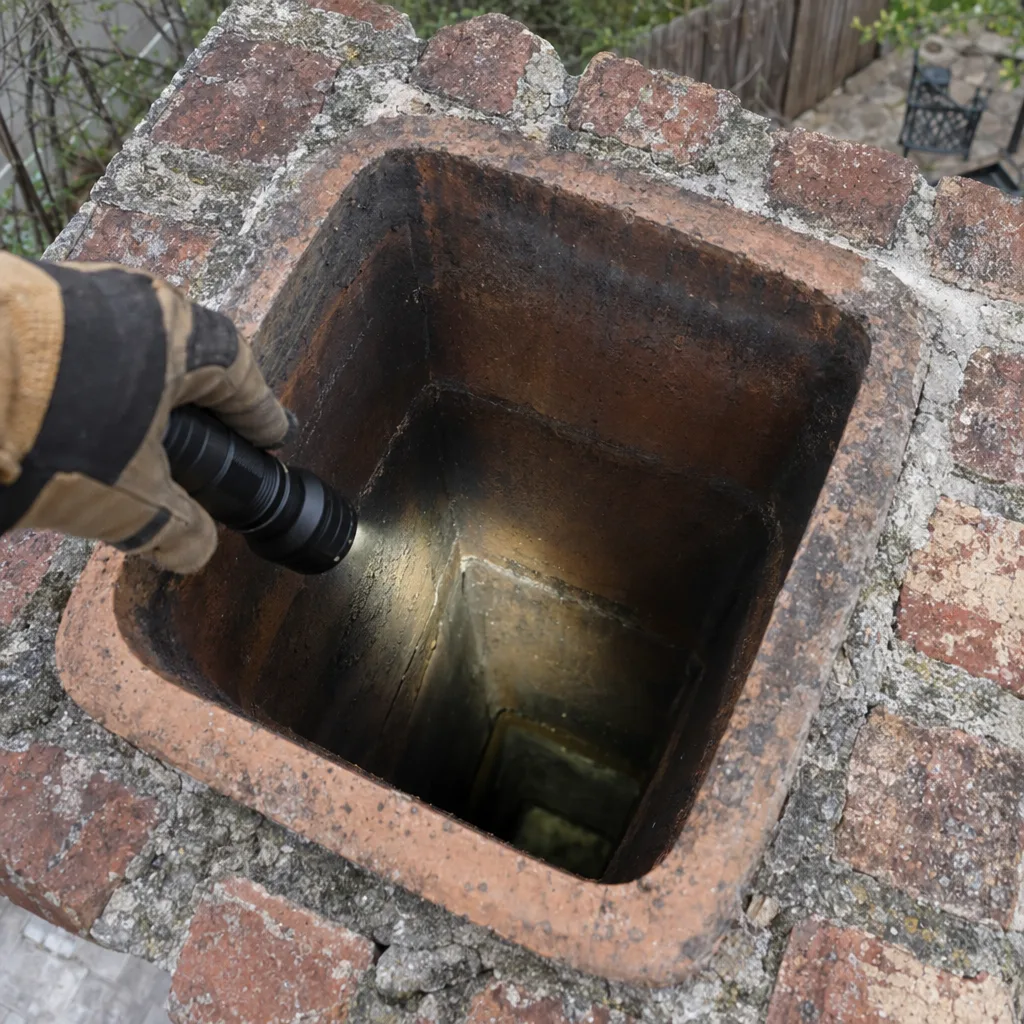
"Most outdoor fireplace failures we fix were preventable with the right build process from the start."
Safe Flue Chimney Sweep And Repair, Dallas, TX
This is the baseline checklist we use when evaluating any outdoor fireplace build in the Dallas area. A legitimate chimney contractor or masonry builder should be doing all of these without being asked.
Yes, with conditions. If the foundation is sound and the firebox dimensions are correct, adding a chimney cap, relining the flue, or repointing deteriorated mortar joints are all straightforward jobs. We do this regularly across Dallas and the surrounding area, including Garland, Carrollton, and Rockwall.
If the foundation has shifted or the firebox geometry is wrong, repair gets complicated quickly. Correcting firebox proportions means partial demolition. A foundation problem may require full teardown and rebuild. We will tell you honestly which situation you are in after an inspection, rather than recommending repairs that will not last.
For a full picture of partial versus complete rebuilds, see our guide on partial vs full chimney rebuild Dallas.
Before buying a home with an existing outdoor fireplace: get a Level 2 inspection before closing. We cover exactly what that involves in our fireplace inspection checklist for home buyers. An uninspected outdoor fireplace is a liability, not an asset.
Straight answers to what Dallas homeowners ask us most.
Technically yes, if they pull the right permits and follow masonry fireplace construction standards. In practice, most do not. Landscaping companies are excellent at grading, planting, and hardscape surfaces. They are not typically trained in chimney flue sizing, firebox geometry, or refractory materials.
The result is often a fireplace that looks professional but smokes badly, deteriorates quickly, or fails inspection. If you are hiring a non-chimney contractor for an outdoor fireplace, require them to work from engineered plans and have a chimney professional review the flue design before construction starts.
Yes. Outdoor wood-burning fireplaces accumulate creosote just like indoor units. If anything, they may accumulate more debris -- leaves, insect nests, and windblown material -- because they are exposed to the elements year-round without the protection of a roofline.
Annual cleaning is the standard recommendation for any actively used wood-burning system. If the fireplace is used heavily during fall and winter, have it swept in late spring so it sits clean through the off-season. Read more in our guide on how often to clean a chimney for wood-burning vs gas fireplaces in Dallas.
Creosote in an outdoor unit is still flammable, and a chimney fire in a backyard fireplace can spread to nearby structures or fencing. See our creosote warning signs page for early indicators you can check yourself.
A Level 1 inspection covers the accessible portions of the fireplace and flue and is appropriate for a unit that has been in regular use without any known issues. A Level 2 inspection, which includes video scanning of the flue interior, is recommended when buying or selling a property with an outdoor fireplace, after any storm damage, or when you suspect a structural problem.
See our full breakdown of L1 vs L2 chimney inspection for Dallas homes to understand which applies to your situation. You can also review what to expect from our chimney inspection cost in Dallas (2026 guide).
Two primary standards apply. NFPA 211 (Standard for Chimneys, Fireplaces, Vents, and Solid Fuel-Burning Appliances) covers construction requirements for the firebox, flue, and chimney system. Local jurisdictions adopt and amend these standards through their building codes.
The U.S. Environmental Protection Agency (EPA) also regulates wood-burning devices through emissions standards, which can affect what type of burning appliance is permissible in certain air quality zones.
Your contractor should be familiar with both, as well as the City of Dallas building code. If they are not, that is worth noting before you sign anything.
Gas fireplaces eliminate creosote accumulation and do not produce flying sparks, which makes them preferable in certain situations, particularly on covered patios close to combustible materials. However, they introduce different risks: gas line integrity, carbon monoxide, and the need for properly rated venting.
Gas outdoor fireplaces still require regular inspection. The venting system, burner, and gas connections all need to be checked annually. Our team handles gas chimney and fireplace inspection throughout Dallas. See our gas chimney inspection Dallas guide for details.
Neither fuel type is universally safer. The quality of construction and regularity of maintenance matter more than the fuel choice.
Look for contractors who specifically list masonry fireplace construction in their scope of work, not just general outdoor living or hardscape. Ask whether they pull permits, who designs the flue system, and what materials they specify for the firebox.
A chimney professional should be involved in the design phase, even if a masonry contractor does the physical build. The flue sizing and geometry decisions are the most technically complex part of the project and the most likely to be done wrong by a non-specialist.
Safe Flue Chimney Sweep And Repair provides consultation, inspection, sweep, and repair services for outdoor fireplaces across the Dallas area. Call us at (214) 441-6336 to discuss your project or schedule an inspection of an existing unit.