

Most chimney crown repairs in the Dallas area take one to three hours on-site. Here is what actually drives that timeline, and what to watch for before and after the work.
The Straight Answer
Learn more about chimney repair Dallas TX →
Learn more about chimney rebuild Dallas TX in Garland, TX →
Learn more about firebox repair Dallas in Allen, TX →
Learn more about gas chimney inspection Dallas →
Learn more about chimney repointing Dallas in Plano, TX →
Learn more about smoke chamber repair Dallas in Dallas, TX →
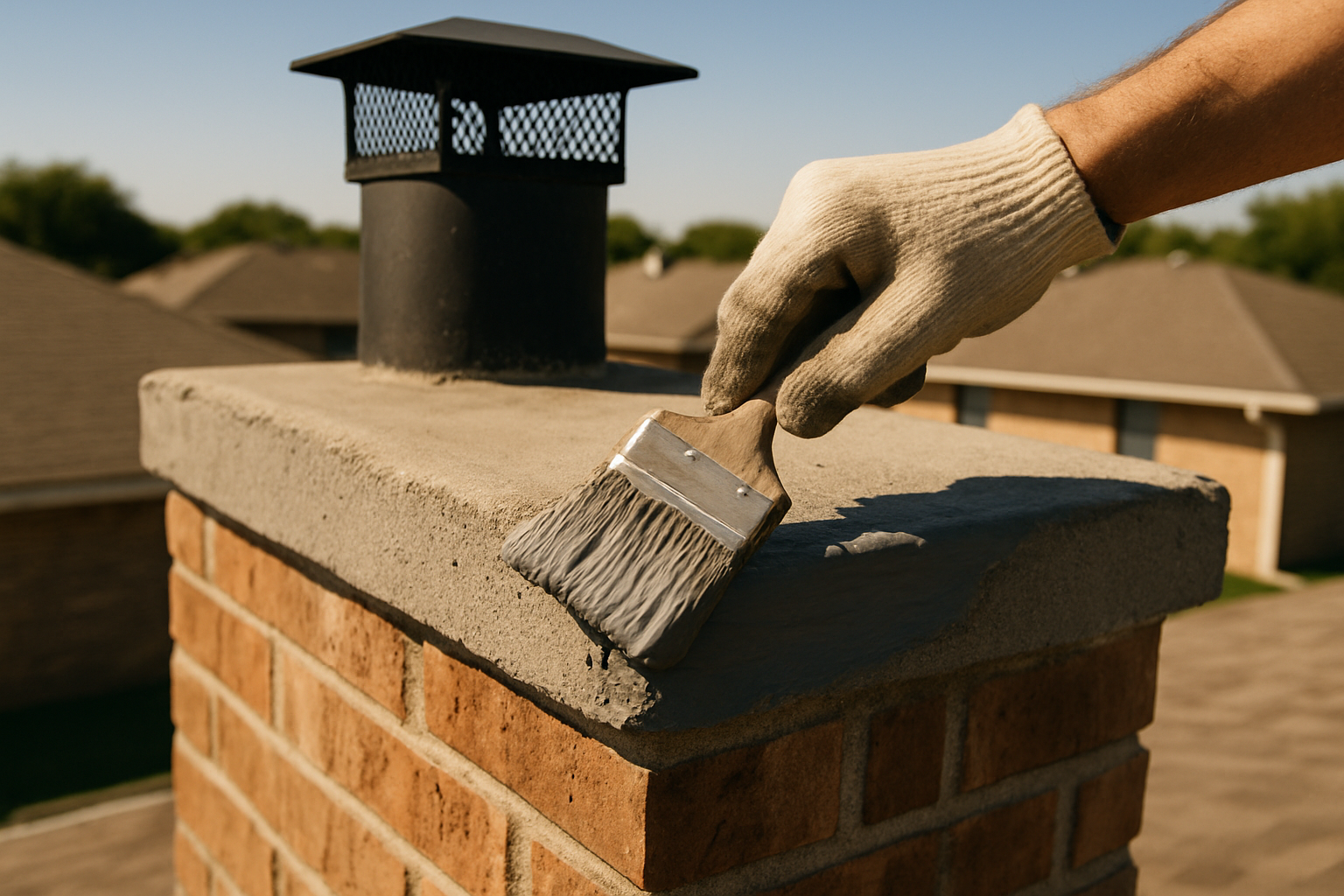
A simple crown sealant application takes about one to two hours. The technician cleans off the old surface, applies a flexible elastomeric crown sealant, and lets it cure. You can usually use the fireplace within 24 hours, once the product has set properly.
A more significant repair, where sections of the crown have cracked through or broken away, takes two to four hours. The technician chisels out loose concrete, re-forms the missing sections with hydraulic cement or mortar mix, feathers the edges, and seals the whole surface. That extra time matters because a poorly prepared edge is where crowns fail again fastest.
A full crown rebuild, which means pouring a new crown from scratch, runs three to five hours for most single-flue chimneys. Multi-flue chimneys or unusually wide chimney tops add time. The fresh concrete needs at least 24 to 48 hours before you expose it to heat or rain, so plan accordingly if weather is coming.
Dallas summers complicate things in one specific way: concrete cures fastest in heat, but if temperatures exceed 90 degrees during the pour, the surface can dry too quickly and crack before it fully bonds. A good technician will either schedule early morning work or mist the crown lightly during hot days to slow the surface cure. If someone is rushing a crown job on a 95-degree July afternoon with no precautions, that is worth asking about.
Winter work is rarely an issue in Dallas, but if temperatures drop below 40 degrees overnight, fresh mortar is at risk. The freezing water inside the concrete causes it to expand and crack before it sets properly. Reputable technicians watch the forecast and either reschedule or use accelerating admixtures when needed.
For context on related repairs, see what to expect during masonry chimney repair in Dallas, which covers the full scope of work beyond just the crown.
Quick Reference
Sealant Application
1-2 hrs
on-site work
Partial Crack Repair
2-4 hrs
on-site work
Full Crown Rebuild
3-5 hrs
single-flue chimney
Safe Flue
Full-service chimney sweeping, inspection, repair, rebuild, and fireplace services throughout the Dallas metro.
☎ (214) 441-6336The Chimney Safety Institute of America (CSIA) recommends annual chimney inspections for all wood-burning and gas fireplaces.
What Drives Repair Time
Hairline cracks you can cover with sealant take far less time than a crown that has heaved or broken in half. A crown with a single horizontal crack running through the center will need the broken section cut out and rebuilt before sealing. That adds an hour of prep work at minimum.
A single-story roof is a quick setup. A two-story or steep-pitch roof takes longer to scaffold or stage safely. Taller chimneys also mean more hauling of materials and tools, which adds real time. Access to the chimney top from an attic hatch versus climbing an exterior ladder changes the job entirely.
Elastomeric crown sealants (CrownCoat or similar products) go on fast and bond to the existing concrete without requiring as much surface demolition. Poured mortar or hydraulic cement repairs take longer to mix, apply, and shape, but they are the only option when structural sections are missing. Some homeowners ask about premixed patching compounds for partial repairs. They work, but the bond is weaker than a proper mortar mix without the right bonding agent.
Crown repairs often reveal related problems: missing or loose mortar joints at the chimney cap, deteriorated flashing, or a cracked flue tile just below the crown overhang. A thorough technician will flag these and, with your approval, address them in the same visit. That adds time but saves a second mobilization fee. If they say nothing and just slap sealant on, ask what they found during the inspection.
The freeze-thaw cycle is less dramatic in Dallas than in northern states, but it still does real damage. Water infiltrates the hairline cracks that form in every concrete crown over time. When that water freezes, it expands and widens the cracks. When it thaws, it contracts and lets in more water. Over three to five years this cycle can turn a minor crack into a structural failure that requires a full rebuild.
The Texas heat does its own damage through thermal expansion. A crown that bakes at 140 degrees all summer and then gets soaked by a fast-moving storm will expand and contract sharply. Without a proper overhang and drip edge, water runs straight down the chimney face, eroding the mortar joints below. See the crown rebuild guide for a full explanation of how freeze-thaw damage progresses.
Most Dallas-area crowns were poured without enough overhang over the chimney sides, and many have no drip edge at all. Water drains directly onto the brickwork instead of away from it. A properly rebuilt crown includes at least a two-inch overhang and a formed drip kerf on the underside, both of which dramatically slow future water damage. If you are getting a repair done and the technician does not mention the drip edge, ask about it directly.
Recognizing the Problem Early
Most homeowners do not get on the roof to check, which is reasonable. But you can spot several warning signs from the ground or inside the house.
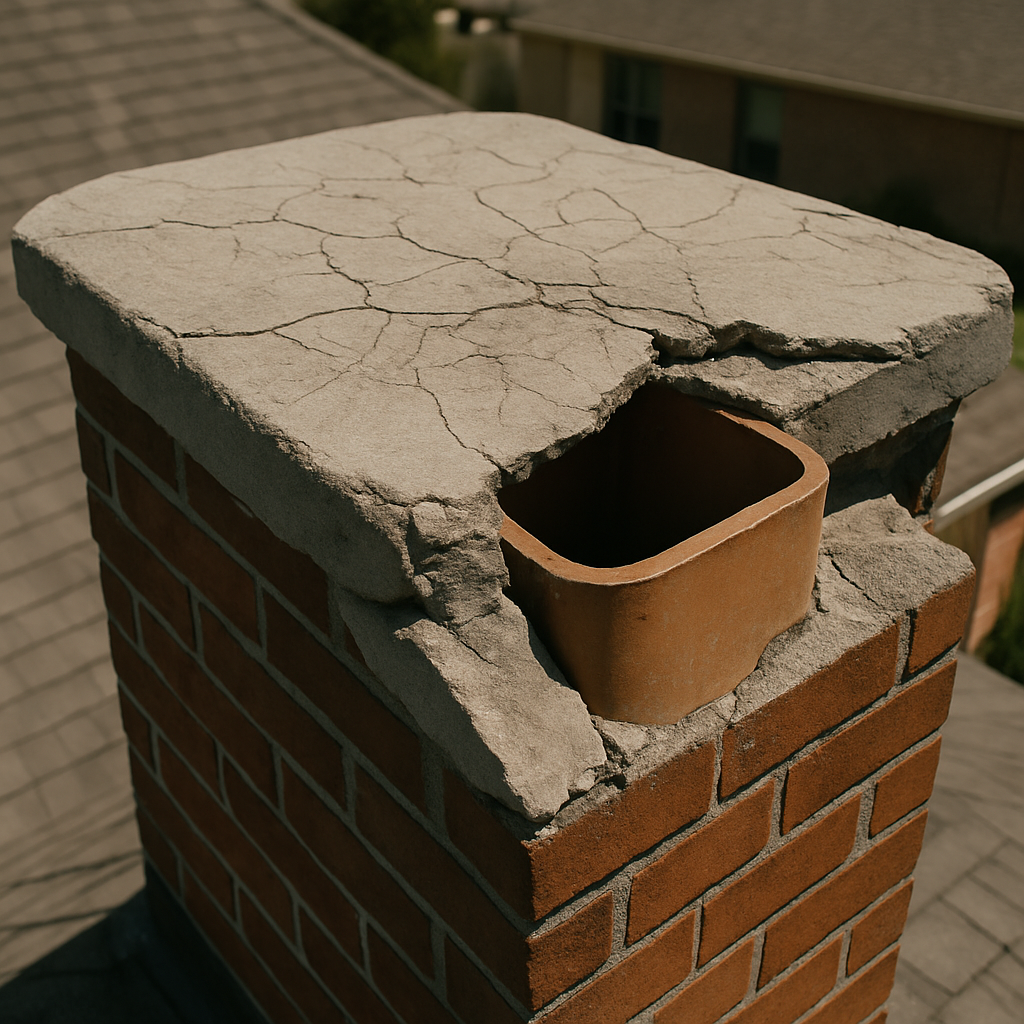
A repair makes sense when the crown structure is fundamentally sound. If the damage is limited to surface cracks, hairline fractures, or a section with minor spalling, a sealant application or mortar patch will extend the crown life by seven to ten years. The crown needs to have enough solid concrete remaining to give the repair material something to bond to.
A rebuild is the right call when the crown has broken into multiple pieces, when it is less than an inch thick in sections (below the two-inch minimum), when water has saturated the underlying flue tiles, or when the crown has been repaired repeatedly without lasting results. Patching a structurally compromised crown is like painting over rot. It looks better for a season and then fails again.
For details on the rebuild process itself, the crown rebuild guide walks through each step. If you are unsure which situation applies to your chimney, a chimney inspection will give you a clear answer before you spend money on a repair that will not hold.
Industry standards for inspection and repair
Standard for chimneys, fireplaces, and venting systems
Frequently Asked Questions
Elastomeric crown sealants are sold at masonry suppliers and can be applied by a careful DIYer on a single-story roof with a low pitch. The main risks are poor surface prep (the product will not bond to dirty or loose concrete) and applying it in wrong weather conditions. If the crown has any structural damage, patching it without assessing the underlying condition usually just delays the inevitable repair.
A crown poured at the right thickness (minimum 2 inches at the edges, 4 inches over the flue tiles), with proper overhang and a drip edge, should last 15 to 20 years in the Dallas climate. Annual applications of a penetrating crown sealant after year 5 can extend that further.
Sweeping and crown work are usually done in the same visit if both are needed. The sweep typically happens first, then the crown is addressed while the technician is already on the roof. Combining saves you a separate service call. Read the complete chimney sweep guide to understand what a full-service visit covers.
It depends on where the water is entering. Crown failure accounts for a significant portion of chimney leaks, but water can also come through deteriorated flashing, a missing or improperly sized cap, or cracked flue tiles. A good technician will trace the water source before assuming it is just the crown. Fixing only the crown when the flashing is the real problem means the leak continues.
Gradual deterioration is generally excluded from standard homeowners policies, which treat it as a maintenance issue. If the damage was caused by a specific event, such as a hailstorm or a falling tree branch, you may have a claim. Document the damage with photos and contact your insurer before repairs begin if you think a covered event is involved.
If you have not had an inspection in a year or more, start with a Level 1 or Level 2 inspection before authorizing any repair work. A Level 2 inspection includes a camera scan of the flue, which matters if water has been entering the chimney, since it may have reached the liner. See the comparison of L1 vs L2 chimney inspections for what each covers.
Service Areas
Safe Flue Chimney Sweep And Repair
Safe Flue handles the full range of chimney work: sweeping and cleaning, Level 1 and Level 2 inspections, crown repair and rebuild, masonry repair, tuckpointing, flue liner work, waterproofing, cap installation, and fireplace services. One company, one call.
If you are not sure whether your chimney needs a repair or a full inspection first, call us at (214) 441-6336. We can talk through what you are seeing and give you a straight answer about the next step, before you commit to anything.
Removes creosote, soot, and debris from the flue. Required before crown work so the technician can assess the liner condition. See the 2026 sweeping cost guide.
Identifies the source of leaks and the extent of crown damage. A Level 2 includes a camera scan of the flue. View inspection costs.
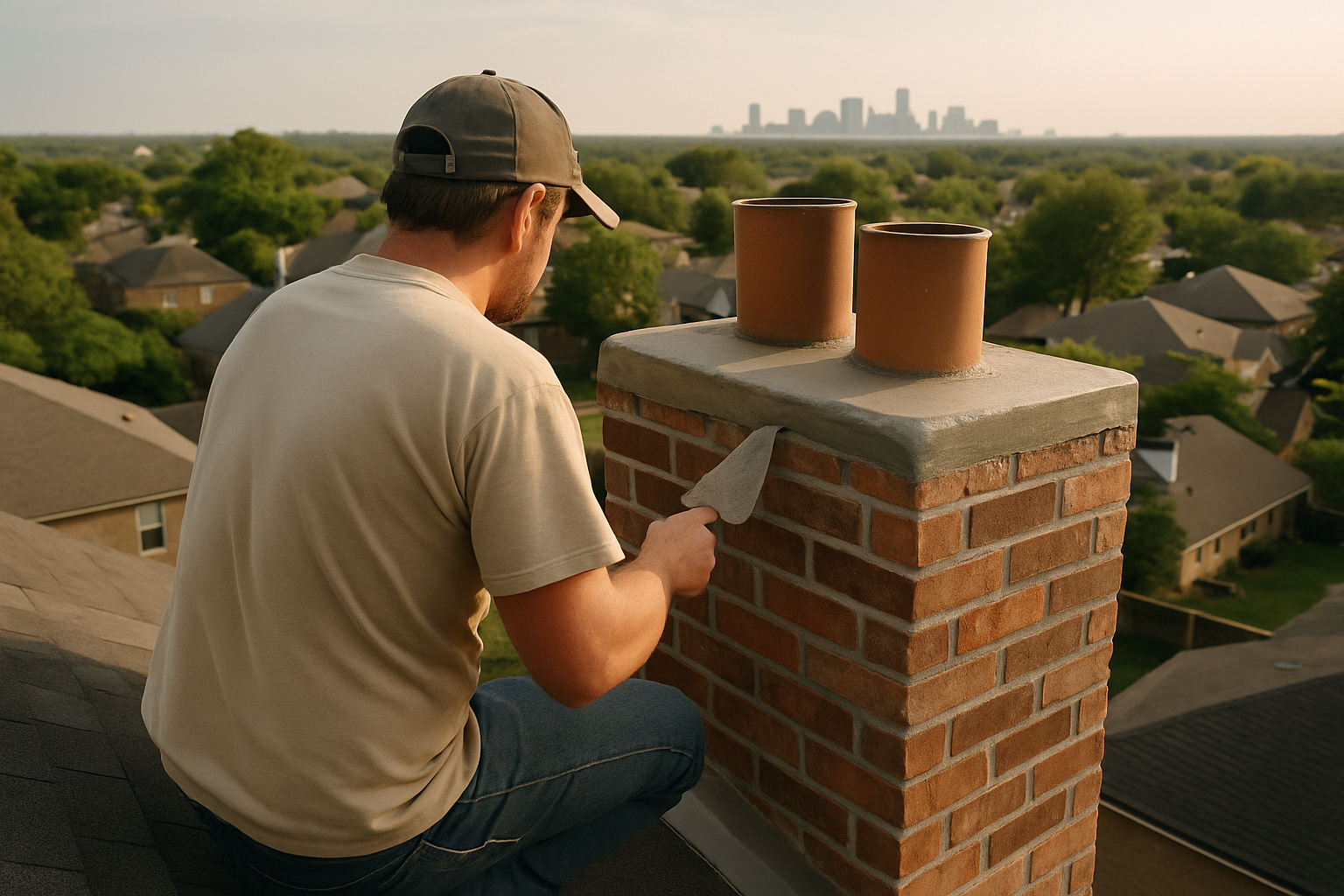
Crown sealing, partial repair, or full rebuild. Often combined with mortar repointing and waterproofing.
When repair is not enough. Full or partial chimney rebuild, liner replacement, and new chimney installation in Dallas.
Ready to Schedule?
A failed crown does not fix itself between seasons. The sooner the damage is documented, the more options you have, and the lower the likely cost. Call Safe Flue at (214) 441-6336 to schedule in Dallas or anywhere in the metro.
© 2026 Safe Flue Chimney Sweep And Repair. Dallas, TX. All rights reserved.