

Flashing failure is the most common source of chimney leaks in Dallas homes. Before you climb up there with a tube of caulk, here is what you actually need to know about what the job involves and what goes wrong when it is done incorrectly.
Safe Flue Chimney Sweep And Repair - Dallas, TX
Learn more about chimney repointing Dallas in Plano, TX →
Learn more about smoke chamber repair Dallas in Dallas, TX →
Here is what each path actually looks like -- the steps, the risks, and the realistic outcomes.
Most homeowners who attempt chimney flashing repair on their own are tackling the visible symptom: they see a gap or a lifted edge and want to seal it. The typical approach is to buy a tube of roofing caulk or flashing tape from a hardware store and apply it over the problem area. This stops the immediate leak in some cases. It almost never solves the underlying issue.
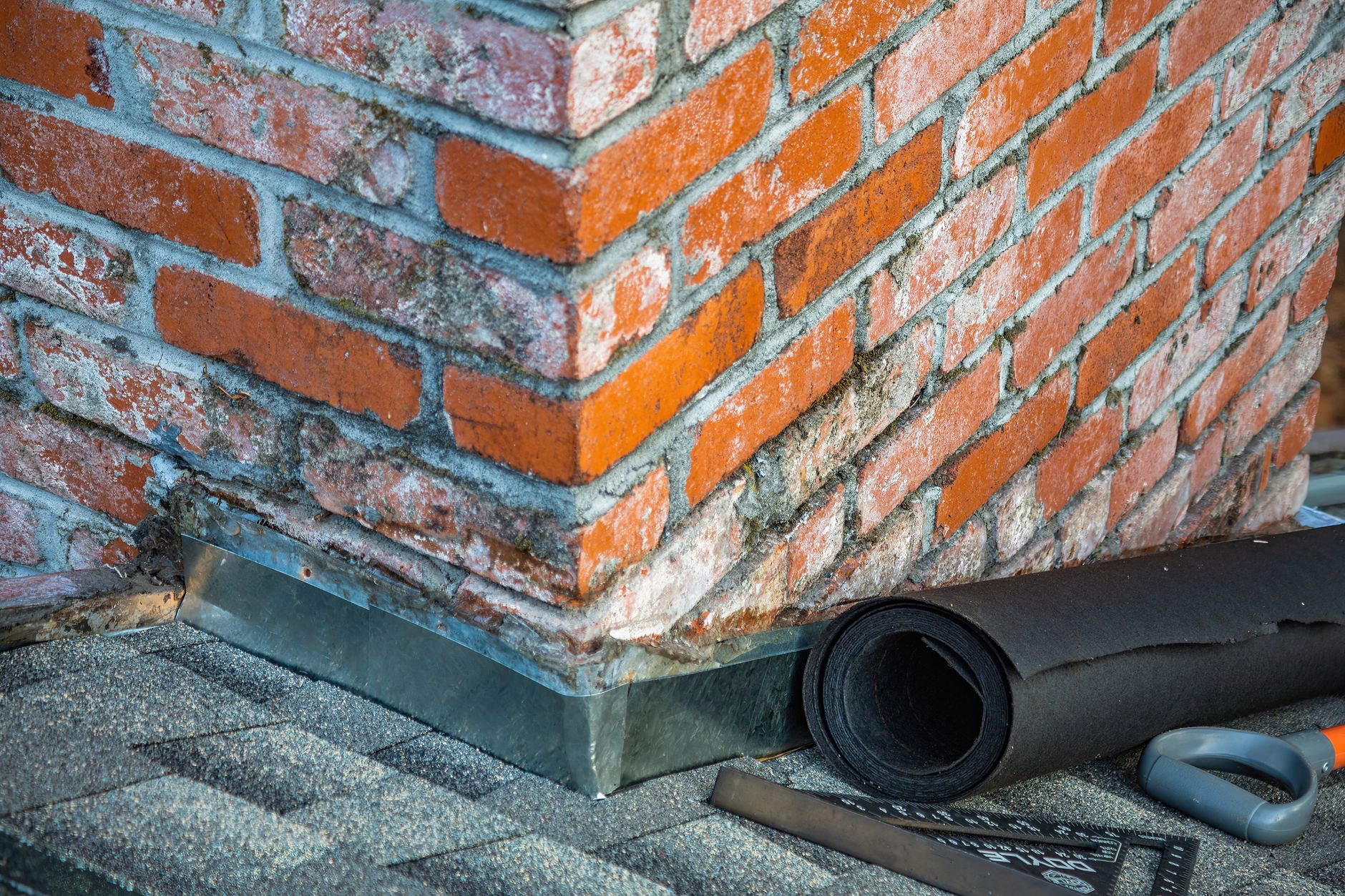
Here is why that matters: flashing that has lifted off the mortar joint has done so because the reglet has cracked or the mortar has eroded. Caulk over the top does not re-anchor the metal. It seals the surface temporarily, but the flashing can still flex during the next heat wave, and the caulk breaks free within one or two seasons.
The safety consideration: Chimney flashing sits at a roof penetration, typically near the peak. In Dallas, roof slopes are often steep enough that a fall is a genuine risk. The Occupational Safety and Health Administration requires fall protection at six feet or more. Working on a residential roof without the right equipment puts you in that category.
A professional flashing repair starts with diagnosis, not materials. Before anything gets touched, the technician identifies whether the leak is actually from the flashing or from a related failure -- a cracked crown, an open mortar joint, or a missing cap. Flashing gets blamed for a lot of leaks that originate somewhere else on the chimney.
Once the source is confirmed, the repair approach depends on what is actually wrong. A partial flashing repair -- replacing one section of step flashing or re-bedding a loose counter-flashing -- takes two to three hours. A full flashing replacement on a standard two-story Dallas home typically takes four to six hours. That timeline assumes the masonry underneath is in reasonable shape. If mortar joints need re-cutting and the reglets have to be rebuilt, it takes longer.
Material matters: Professional-grade flashing is typically 20-gauge galvanized steel or lead-coated copper. Many hardware stores carry 28-gauge aluminum. The difference in longevity in Texas heat is significant -- the lighter material warps and oxidizes faster.
DIY materials for a basic flashing patch run $20 to $60. A full DIY replacement of materials (metal, sealant, fasteners) typically runs $80 to $200 depending on chimney size. That does not include tools, safety equipment, or time.
Professional flashing repair costs vary with chimney height, access, the extent of masonry involvement, and whether a cricket needs rebuilding. Costs vary enough that a specific number here would be misleading -- what we can tell you is that getting a proper inspection first prevents paying to fix the wrong thing. See our chimney inspection cost guide for Dallas to understand what to expect.
The harder cost to calculate is what happens when a bad DIY repair allows water to keep entering the structure. Interior water damage, framing rot, and mold remediation each cost multiples of what the original repair would have run.
There is a narrow window where DIY flashing work makes practical sense: if you have confirmed that the flashing is still intact and mechanically attached, if the gap is limited to a dried-out sealant bead at the top edge of the counter-flashing, and if you are comfortable working on your roof safely, a temporary patch is a reasonable holding measure until you can get a professional out.
That is a temporary patch, not a repair. It buys time, not a fix.
Everything beyond that -- any situation where the metal itself needs to move or be replaced, where mortar joints are involved, or where you cannot clearly identify the source of the leak -- is a professional job. The Chimney Safety Institute of America maintains guidelines on chimney system maintenance that homeowners can reference at csia.org.
Flashing problems rarely appear in isolation. Water that enters through compromised flashing typically follows the masonry down and can also compromise the crown, the cap, and the mortar joints. If the flashing has been leaking for more than one season, you should inspect those components at the same time.
The National Fire Protection Association standard NFPA 211 covers chimney inspection requirements and is available at nfpa.org.
Any one of these means the situation needs professional attention now, not at the start of the next fireplace season.
If staining has already appeared on your ceiling or walls, water has been penetrating long enough to saturate building materials. That is not a slow drip -- it is structural exposure.
Rust inside the firebox means water has been making it all the way down the flue. The source is usually flashing or a missing cap, and by the time rust is visible, the interior has seen repeated wetting.
That white powder is efflorescence -- mineral salts being pushed out of the masonry by water moving through it. The flashing may not be the only point of entry at this stage.
If counter-flashing has pulled free from its reglet and you can move it by hand, it is no longer functioning. Any rain event from that point forward runs directly behind it.
Flashing is one piece. Here is the full picture of what we handle.
We perform Level 1 and Level 2 inspections. If you are buying or selling a home, or have had any significant event near the chimney (storm, fire, earthquake), a Level 2 is required. See our guide on L1 vs L2 chimney inspection in Dallas.
Creosote removal for wood-burning fireplaces and debris clearing for gas flues. Frequency depends on how much you use the fireplace. Our guide covers how often to clean a chimney for wood vs gas in Dallas.
Tuck-pointing, spalling brick repair, crown work, and full or partial chimney rebuilds for chimneys with structural deterioration.
Vapor-permeable waterproof sealant application to the exterior masonry. Helps extend the life of mortar and brick in our climate of high summer heat and occasional freezing. See full details in our Dallas waterproofing cost guide.
Clay liner repair and stainless steel liner installation. If you are deciding between the two, our article on clay vs stainless liner for Dallas homes covers the trade-offs clearly.
New chimney installation in Dallas and full chimney rebuilding when repair is no longer the right answer.
Flex seal products are designed for general waterproofing and are not formulated for the thermal cycling that chimney flashing experiences. They can work as an extremely short-term patch but tend to fail within one season. Hydraulic cement is a masonry product meant for stopping active water flow in foundations -- it is not appropriate for flashing repair.
Galvanized steel flashing installed correctly with mechanically secured counter-flashing typically lasts 15 to 25 years in North Texas conditions. Lead-coated copper lasts longer. Aluminum, which is cheaper and common in builder-grade construction, often shows signs of failure within 10 years here due to thermal expansion and oxidation. The sealant used at the joint is always the first thing to go -- that is normal maintenance.
Coverage depends on the cause. Damage from a specific event like a hail storm or falling tree is typically covered under dwelling coverage. Deterioration from lack of maintenance is almost universally excluded. Document the condition of your flashing with photos after any significant weather event -- this matters when filing a claim. Your adjuster will want to see evidence that the damage correlates to the event, not long-term neglect.
North Texas does not get prolonged freezing periods, but we do get hard freezes, sometimes with significant rain beforehand. Water that has entered through damaged flashing and saturated wood framing can cause real damage during a freeze event. Waiting until spring also means several more months of water infiltration. If the flashing is actively leaking, the right time to fix it is now. You can reach us at (214) 441-6336 to schedule a time.
Roofers can do the roof-side portion of the work -- integrating step flashing with shingles or replacing the saddle. The chimney-side portion -- cutting reglets into mortar, bedding counter-flashing, and evaluating the masonry underneath -- is masonry work that most general roofers are not equipped for. For lasting results, you want both sides done correctly. In many cases, a chimney specialist working directly with your roofer produces the best outcome.
A cricket is a peaked structure built behind a wide chimney to divert water away rather than letting it pool. The International Residential Code generally requires a cricket when a chimney is more than 30 inches wide, measured perpendicular to the slope. Many Dallas homes built before this was standard code do not have them. If water is consistently collecting behind your chimney and the flashing keeps failing in that area, a cricket may be the actual solution.
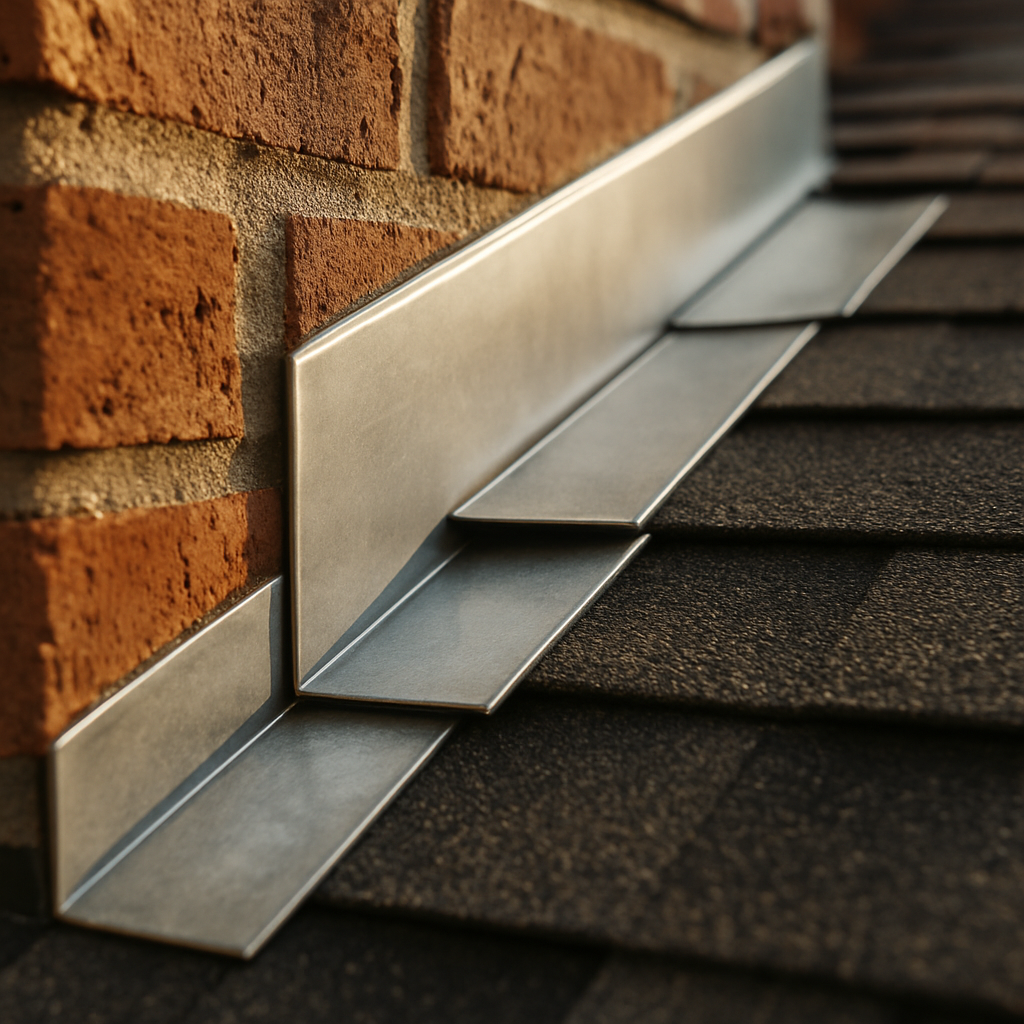
The single most useful step you can take before spending money on any chimney repair is a proper inspection. Not a visual check from the ground -- an actual close-up inspection from the roof and from inside the firebox. This tells you exactly what is wrong, where the water is entering, and what the repair will actually involve.
At Safe Flue, we do not sell repairs you do not need. If the flashing is fine and the leak is coming from a cracked crown or a missing cap, we tell you that. You can read more about what a thorough inspection involves in our complete guide to chimney service in Dallas or our page on chimney cleaning in Dallas.
We also serve homeowners across the broader DFW area including Sachse, Royse City, Red Oak, Seagoville, Saginaw, and many more communities across the Metroplex.