

Smoke chamber repair Dallas: Your Top Questions Answered
Smoke chamber repair Dallas: Your Top Questions Answered ● Dallas,…
Need Chimney Repointing In Combine? SafeFlue Chimney Sweep and Repair restores mortar joints to help stop leaks and protect your chimney masonry
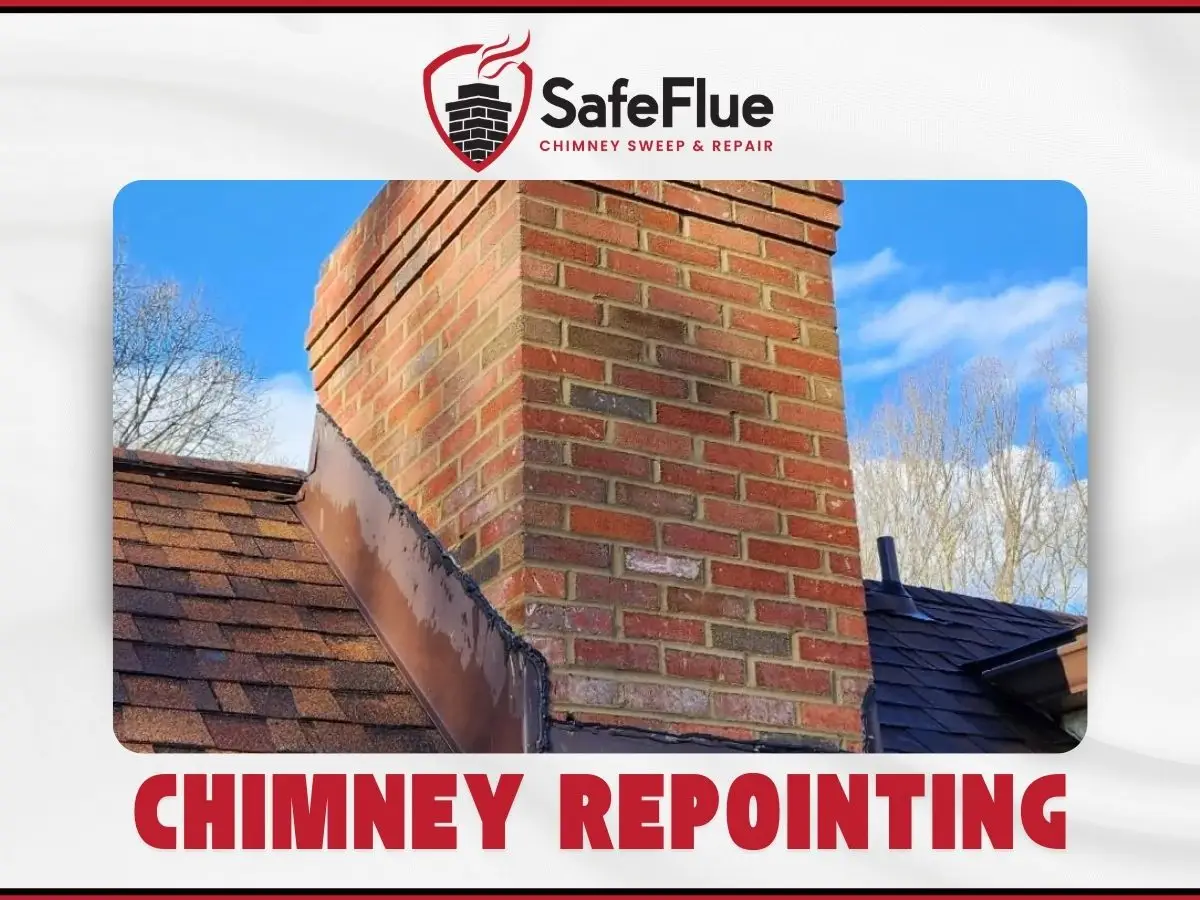
Chimney Repointing in Combine, Texas is the process of removing worn or crumbling mortar between bricks and replacing it with fresh mortar that fits your chimney masonry. It helps homeowners and property managers dealing with loose joints, small leaks, and why is there sand on my roof moments.
With SafeFlue Chimney Sweep & Repair, you can expect a straightforward visit. We inspect the joints, identify where the mortar is failing, protect nearby areas, then repoint the chimney where needed so the brickwork can shed water and stay stable through Combine hot summers and sudden stormy stretches across TX.
Need Help? Call SafeFlue Chimney Sweep & Repair near you
Mortar is the glue holding the bricks together. Over time, weather and moisture wear it down. Chimney repointing replaces the outer portion of failing mortar joints so the masonry can do its job.
People sometimes ask if this is the same as rebuilding. Not quite. Repointing focuses on the mortar joints. If bricks are cracked, leaning, or deeply spalled, that may require additional masonry repair alongside repointing, and in some cases Chimney Replacement in Combine, Texas.
In Combine, we commonly see mortar issues on older brick chimneys, chimneys that take a lot of wind driven rain, and homes where the fireplace does not get used often so problems go unnoticed.
A common Combine scenario is the little brick chimney you can see from FM 1389 when you pull into the driveway. It has often been there forever. That is often the one where the sunny side looks okay, but the windward side has joints that have quietly been eroding for years.
Chimneys live a tougher life than most masonry. They stick up above the roofline and take the brunt of weather. In Combine and the surrounding Dallas County and Kaufman County edges, conditions that speed up mortar wear can include heavy rain with wind that pushes water into joints, big temperature swings between day and night, strong sun exposure that dries surfaces unevenly, moisture that enters small cracks then expands and contracts, and past patchwork repairs using hard mortar that does not match the original masonry.
One of our techs hears this a lot. But the bricks look fine. That is why repointing is so useful. Bricks can look solid while mortar joints are the weak link.
We keep the process practical and tidy. Chimney work is already up high. There is no need for drama down below.
We aim for clear communication. If you like simple summaries, you will fit right in. If you like details, we have those too.
Need Help? Call us for Chimney Services!
Chimney issues can overlap. A leak might be mortar, crown, flashing, or even a cap problem such as a missing or damaged Custom Chimney Cap in Combine, Texas. Repointing is ideal when the mortar joints are the main pathway for water and movement.
| What you see | What it can point to |
|---|---|
| Cracked missing sandy mortar lines | Repointing |
| Brick faces flaking or popping off | Brick replacement plus moisture source check |
| Water stains where roof meets chimney | Flashing evaluation sometimes repointing too |
| Cracks on the top slab of the chimney | Crown repair and water management |
| Smoke issues indoors | Flue draft or blockage evaluation |
If more than one issue is present, we talk through priorities. Sometimes the smart move is addressing water entry points first, then repointing to stabilize the masonry.
Repointing is mainly about restoring the chimney ability to resist water intrusion and keeping the brick assembly stable. It can also help reduce ongoing deterioration that starts small and grows.
No one wants a chimney that becomes that project you keep meaning to get to. Repointing is often the kind of maintenance that keeps the project list from getting out of hand.
It depends on how widespread the joint deterioration is. In Combine, we often see one side of the chimney more exposed to weather. That side may need more attention.
Think of it like fence pickets. If two are loose, you fix two. If the whole line is wobbling, you take a wider view.
Timing depends on access, the amount of mortar to replace, weather, and the chimney height and complexity. A simple exterior with clear roof access is different from a steep roof or a tall chimney with multiple offsets.
We schedule with Combine weather in mind. Texas can give you sunshine at breakfast and a surprise shower by lunch. If you have lived here a while, you already know the drill.
Repointing involves removing old mortar, so there is some dust and debris. We focus on controlling it and cleaning up.
If you have a favorite flower bed right under the chimney, tell us. We have seen more than one homeowner point and say not the roses. Fair enough.
Matching is part art and part practical masonry work. Mortar color and texture depend on sand, mix, age, and how weathered the existing chimney is. New mortar can look a bit different at first and then blend more as it weathers.
If your home is visible from the street or you have a front facing chimney near your main entry, appearance matters. We treat it that way.
Directions To Our Office
Yes, repointing can still be worth doing because it is about the chimney as a structural and water shedding element, not just about fires. Even if the fireplace is decorative or unused, the chimney is still out there taking rain, sun, and wind.
Water does not care whether the fireplace gets used.
SafeFlue Chimney Sweep & Repair handles both masonry repairs and chimney service work. Repointing is exterior focused. Sweeping and flue inspection are interior focused, such as a Chimney Sweep in Combine, Texas.
We hear a quick story in Combine. Homeowner says we thought it was the roof. Roofers say we think it is the chimney. Sorting out whether water is entering through mortar joints, crown cracks, or flashing is part of choosing the right fix.
Some chimney symptoms are easy to shrug off until they are not. If you spot these, it is worth getting the chimney looked at.
If you are driving down Highway 175 or headed toward Seagoville and you glance at your chimney from the yard and think that looks a little rough, that instinct is usually worth listening to.
Combine is a mix of open land, newer subdivisions, and established homes. Wide open lots can mean more wind exposure. Some homes sit where water and weather hit the chimney hard, especially on the side facing open fields.
Every chimney is a little different, even if the houses look similar from the street. If you want to confirm coverage, you can also review Combine, Texas service areas and the broader Service areas.
You do not need to prep much, but a few simple steps help everything go smoothly.
If you have attic access, it is helpful, but not required for exterior repointing.
After repointing, most homeowners just want to know two things. What was fixed and what should they keep an eye on.
After a heavy Combine rain, do a quick visual check from the ground. You are not looking for perfection. You are looking for obvious new staining, missing mortar, or anything that looks changed.
SafeFlue Chimney Sweep & Repair serves Combine and nearby areas. ZIP codes commonly associated with Combine and the surrounding communities include
If you are not sure which applies to your address, we can still help you figure out service for your part of Combine, TX.
You want a crew that works on chimneys every day, not just when we get around to it. Chimneys are a mix of masonry, water management, and roofline access. It takes routine and attention to detail. To learn more about our team, visit the About Us page.
We keep it down to earth. If something is minor, we say so. If something needs attention soon, we explain why without turning it into a scare story.
If your mortar joints are cracking, crumbling, or letting water work its way in, it is time to talk about chimney repointing in Combine. SafeFlue Chimney Sweep & Repair is ready to take a look, explain what we find, and help you plan the next step.
To schedule, use our Contact Us page or call +1 972 900 8925.
Chimney repointing involves repairing the mortar joints between bricks to prevent water infiltration and structural damage, which is especially important in Combine’s climate to maintain chimney safety and efficiency.
Signs you may need repointing include visible cracks, crumbling mortar, loose bricks, or signs of water leakage around the chimney.
Yes, repointing helps restore structural stability and reduces the risk of leaks or fire hazards associated with deteriorating mortar joints.
With proper materials and workmanship, repointing can protect your chimney for several months or longer, depending on weather conditions and regular maintenance.
Repointing may produce some dust and debris, but SafeFlue Chimney Sweep & Repair takes precautions to minimize mess and disruption to your home during the service.
Smoke chamber repair Dallas: Your Top Questions Answered ● Dallas,…
Gas chimney inspection Dallas: A Complete Guide Dallas, TX ●…
How Long Does Chimney crown repair Dallas Take? Dallas, TX…