

Most chimney damage in Dallas gets worse because homeowners either wait too long or attempt repairs without understanding what they are actually fixing. This guide covers the mistakes that turn a $300 repair into a $3,000 rebuild.
✓
Learn more about firebox repair Dallas in Richardson, TX →
Learn more about chimney rebuild Dallas TX in Carrollton, TX →
Learn more about chimney inspection Dallas in Arlington, TX →
Learn more about custom fireplace Dallas in Irving, TX →
Learn more about chimney cleaning dallas →
Learn more about firebox repair Dallas in Mesquite, TX →
Learn more about masonry chimney repair Dallas →
Learn more about chimney rebuild Dallas TX in Garland, TX →
Learn more about firebox repair Dallas in Allen, TX →
Learn more about gas chimney inspection Dallas →
Learn more about chimney repointing Dallas in Plano, TX →
Learn more about smoke chamber repair Dallas in Dallas, TX →
Licensed
✓
Insured
✓
Dallas Local
24/7
Emergency Service
Dallas homeowners make a handful of the same mistakes every year. Some are understandable. All of them end up costing more than the original repair would have.
The NFPA 211 standard calls for chimney inspections once a year, regardless of how often you use the fireplace. Most Dallas homeowners skip this, especially on gas fireplaces where there is no visible soot. That is a mistake.
Gas logs still produce carbon monoxide. Mortar cracks and liner damage happen whether you burn wood or gas. A technician can spot a cracked flue tile or a blocked cap in 30 minutes. Left alone, a cracked flue tile allows combustion gases to leak into living spaces.
See our breakdown of what each inspection level covers in our guide to L1 vs L2 chimney inspections for Dallas homes, and get ahead of costs with our chimney inspection cost guide for Dallas homeowners.
What You Risk
Carbon monoxide leaks from cracked flue tiles on gas fireplaces
Chimney fires from undetected creosote buildup on wood-burning systems
Small liner cracks that expand with each heating season until a full reline is needed
Water damage that voids homeowner's insurance claims if no inspection record exists
NFPA Standard
NFPA 211: Standard for Chimneys, Fireplaces, Vents →The DIY Trap
Caulk over mortar joints
Seals the surface but traps water behind it. Spalling accelerates faster than if left alone.
Use interior grout on chimney crowns
Interior grout is not rated for freeze-thaw cycles. It fails within one season.
Apply waterproofing sealer before repairing cracks
Traps existing moisture inside the masonry, worsening the damage the sealer was meant to prevent.
Reline the flue without first cleaning and inspecting it
Installs a new liner over creosote buildup or debris that will restrict draw from day one.
Chimney repair looks simple from the outside. Cracked mortar, loose bricks, a worn crown. The fix should be obvious. But the materials matter as much as the method, and most hardware store products are not rated for chimney conditions.
Mortar joints on a chimney need to match the original mix in both composition and hardness. Use a mix that is too hard and it pulls the softer brick apart as it moves. Use a mix that is too soft and it washes out in the first heavy rain.
The most common DIY mistake we see in Dallas is applying a waterproofing sealer to a chimney that already has cracks. The sealer locks moisture inside the masonry. By the next summer, the brick faces are popping off in chunks.
Creosote is the tar-like byproduct of wood combustion. It builds up in three stages: powdery and brushable at first, then tarry and sticky, then hardened and almost impossible to remove without professional tools. A chimney fire can reach 2,000 degrees Fahrenheit. That temperature cracks liner tiles and can ignite the wood framing surrounding your chimney.
The Chimney Safety Institute of America recommends cleaning when creosote buildup reaches 1/8 inch. Most Dallas homeowners do not get there because they do not know what to look for. An annual sweep catches it before it becomes structural. See the full breakdown of chimney sweep services in Dallas for more on what the process involves.
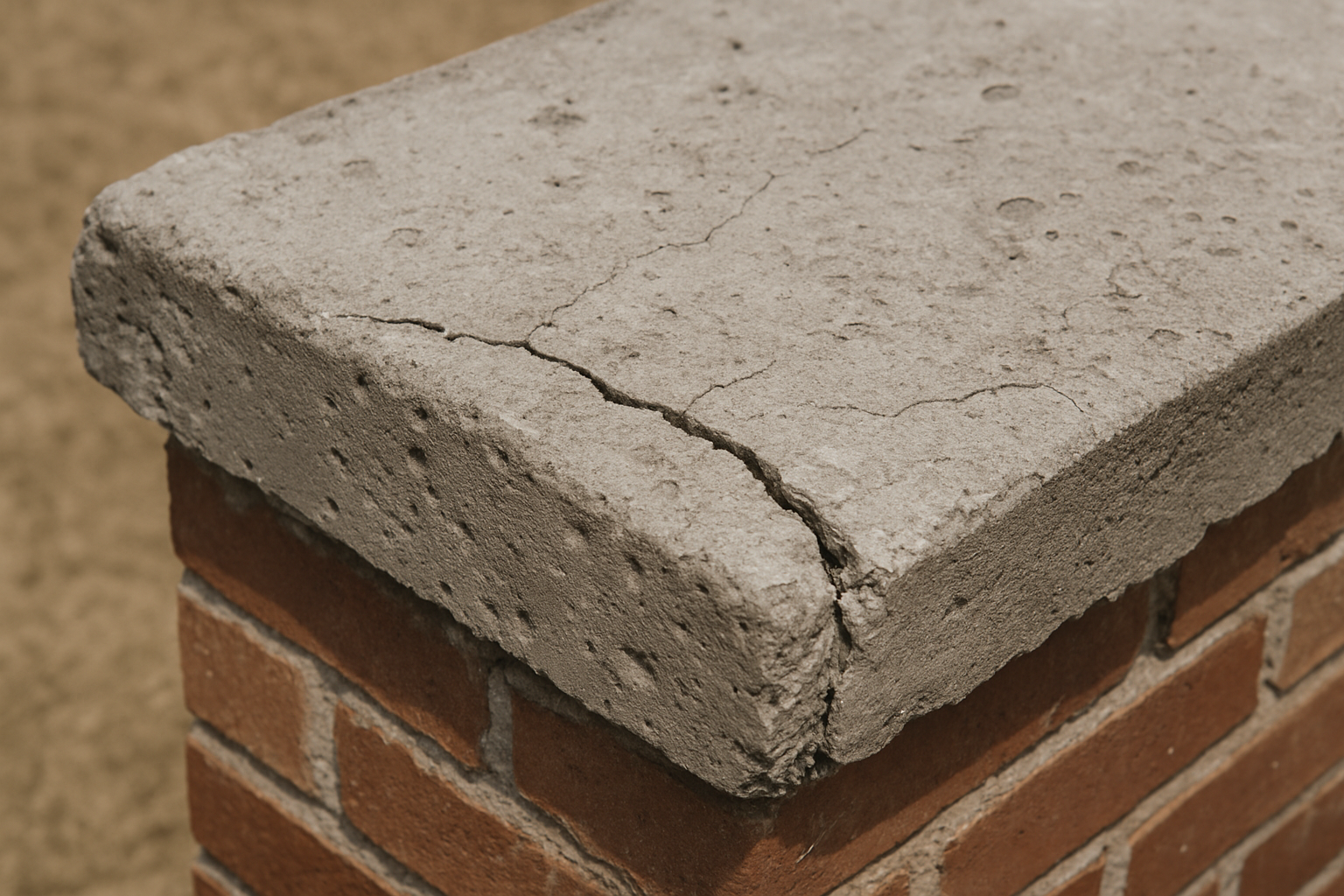
Water is the primary enemy of masonry chimneys in Dallas. A missing chimney cap, a cracked crown, or deteriorated flashing can each allow water to enter the flue. Once inside, water migrates through the mortar joints and into the brick, causing spalling, efflorescence (white staining), and eventually structural failure.
Dallas summer storms are particularly aggressive. The combination of hail, high winds, and rapid temperature swings after a storm can open hairline cracks to visible gaps within a single season. Our guide on Dallas weather and chimney cap damage covers exactly what to check after a storm. Waterproofing costs much less than repointing an entire chimney. See current ranges in our chimney waterproofing cost guide.
Many Dallas homeowners converted wood-burning fireplaces to gas inserts in the 1990s and early 2000s. The original clay tile liner was sized for the higher heat output and larger flue requirements of wood combustion. A gas appliance vented into an oversized liner draws poorly, and condensate can build up inside the flue.
Relining for a gas insert requires a smaller diameter stainless liner that matches the BTU output of the appliance. Skipping this step is one of the most common repair mistakes we see on converted fireplaces. If you are deciding between keeping clay tile or switching to stainless, our guide on clay liner vs. stainless relining for Dallas homeowners walks through the trade-offs.
A $49 chimney sweep special sounds reasonable until you realize what it typically does not include. Many cut-rate services skip the inspection, use wet brushes that leave residue behind, or quote a low entry price and then find reasons to upsell once they are on the roof.
Ask any chimney contractor three questions before booking: Are you licensed and insured in Texas? Will you provide a written inspection report? What does your service include, specifically?
A real inspection takes 45 minutes to an hour. A sweep of a wood-burning fireplace with moderate use typically takes another 30 to 60 minutes depending on buildup. If someone is quoting you a 20-minute full-service sweep, that is not what you are getting. See typical market pricing in our chimney sweeping cost guide for Dallas.
Inspection Checklist
Chimney flashing is the metal seal between the chimney and the roof. It is also one of the most commonly skipped maintenance items in Dallas. Most homeowners do not think about it until they see a water stain on the ceiling near the fireplace.
By the time water stains appear on your ceiling, the leak has typically been active for months. The flashing fails first. Water runs down the chimney into the attic or wall cavity. By the time it shows up inside, drywall and insulation are already damaged.
Flashing inspection takes about 10 minutes during a standard chimney sweep. Flashing repair or replacement takes a few hours. Repairing the ceiling, attic insulation, and any mold remediation that follows takes considerably longer and costs considerably more.
How often you need a sweep depends on how much wood you burn. A fireplace used two or three times a week through winter needs a sweep before the next burning season, at minimum. A fireplace used daily may need mid-season cleaning.
Burning green or wet wood accelerates creosote buildup significantly. Wood needs to season for at least 12 months before it burns cleanly. Buying firewood from a gas station the day you want a fire is one of the fastest ways to coat your flue in creosote.
Gas fireplaces have lower cleaning requirements but still need annual inspection. Our guide on how often to clean a chimney for wood-burning vs. gas fireplaces in Dallas gives specific frequency guidance based on use patterns.
Full creosote removal for wood-burning fireplaces. Gas flue cleaning. Firebox debris removal. Takes 1 to 2 hours for most systems.
Visual and video inspection of liner, firebox, crown, cap, and flashing. Written report included. Required for real estate transactions.
Tuckpointing, crown repair, flashing replacement, cap installation, and spalling brick repair. We match original mortar composition.
Stainless steel liner installation for gas inserts and wood systems. Clay tile restoration where structurally viable. Sized to appliance BTU output.
Full above-roofline and partial rebuilds after storm damage, severe deterioration, or structural failure. Matching brick sourced where available.
Vapor-permeable sealant application after repairs are complete. Prevents water intrusion without trapping existing moisture inside the masonry.
Masonry chimneys in North Texas face conditions that accelerate deterioration compared to many other climates. Summer temperatures regularly exceed 100 degrees Fahrenheit. That heat drives moisture out of mortar joints faster than in cooler climates, making them brittle and prone to cracking.
Dallas also gets more frequent hail than most of the country. Hail impacts on chimney caps, crowns, and flashing create small but consequential damage that builds season over season. A cap dented by hail in April may not cause visible problems until November, when rain starts running inside the flue.
Mild winters here mean many homeowners use their fireplace for only a few months, then completely ignore the chimney for the rest of the year. That gap in attention is when water damage, pest intrusion (primarily raccoons and chimney swifts), and mortar erosion go unnoticed.
Spring is the best time to schedule an inspection in Dallas. Any damage from winter use and spring storm season shows up then, and you have the full summer to complete repairs before the next burning season starts in October.
Pro Tip
Schedule chimney service in spring, before summer heat sets in and before contractor availability tightens up. Fall is the busiest season. Spring gets you faster scheduling and you will not be scrambling when the first cold front hits in October.