Chimney solutions to your problems!
  1. Home
  2. »
  3. Chimney Repointing
  4. »
  5. Chimney Repointing Newark

Chimney Repointing in Newark, Texas

SafeFlue Chimney Sweep and Repair offers Chimney Repointing In Newark to restore mortar strength prevent leaks and protect your chimney schedule service today

Table of Contents

Chimney Repointing in Newark, Texas

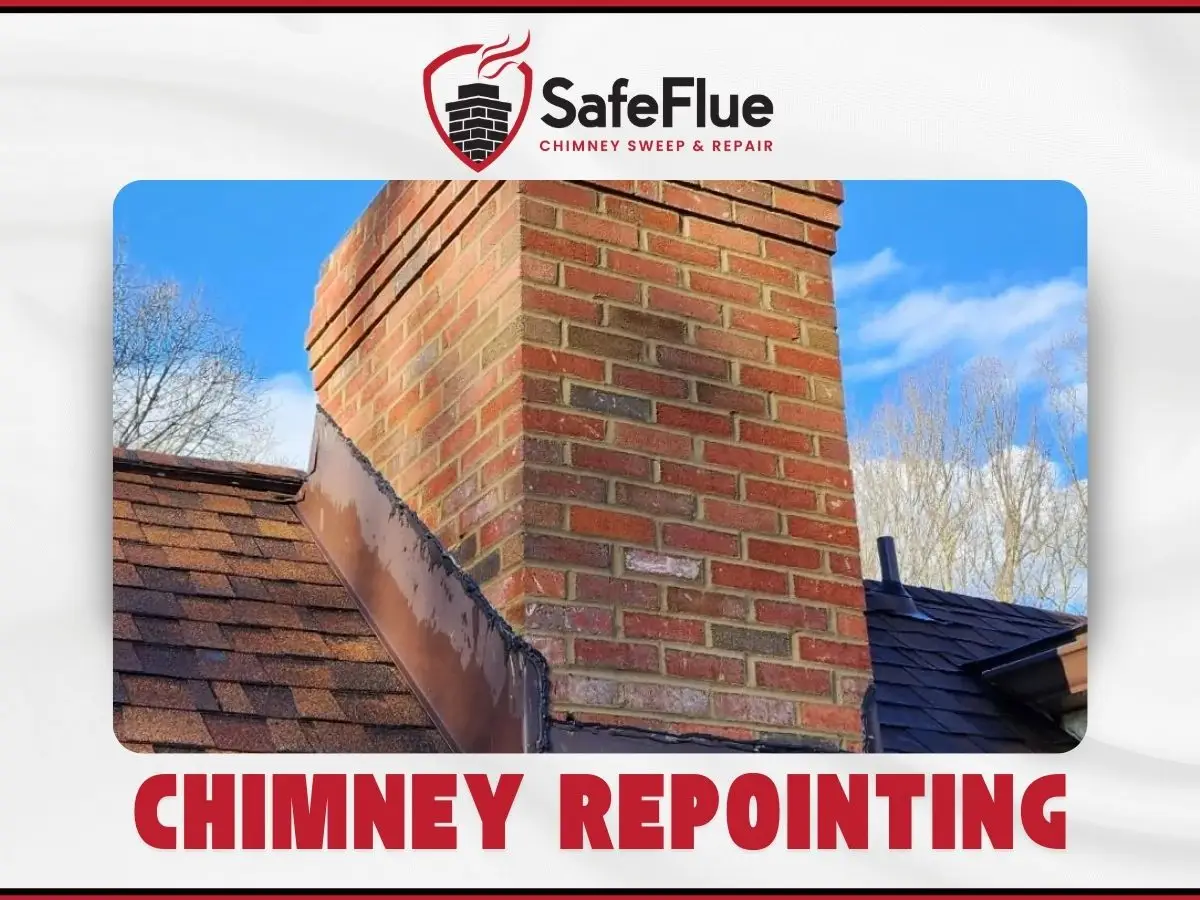
SafeFlue Chimney Sweep & Repair provides Chimney Repointing in Newark, Texas for homeowners and property managers who are seeing crumbly joints, small leaks, or loose brick around the stack. Chimney repointing removes failing mortar between bricks and packs in fresh mortar so the chimney stays stable and better sealed against water.

When you schedule chimney repointing with SafeFlue Chimney Sweep & Repair, expect a close look at the mortar joints, a plan for which sections need attention, and careful work that focuses on the joints without needlessly disturbing solid brick. It is dusty work, but it is the kind of dust that can save you bigger headaches later.

Need Help? Call SafeFlue Chimney Sweep & Repair near you

What chimney repointing means for brick chimneys

Mortar is the glue between chimney bricks. Over time, Texas heat, windy rain, and freeze and thaw nights can dry it out, crack it, or wash it away. Repointing is not a full rebuild. It is targeted masonry repair focused on the mortar joints.

If brick is the book, mortar is the binding. When the binding is failing, you do not toss the whole book. You repair the binding so the pages do not fall out.

SafeFlue Chimney Sweep & Repair Logo

Common Newark chimney issues repointing can address

  • Mortar that is cracked, sandy, or missing
  • Gaps that let rain in and stains show up on ceilings or walls
  • Small areas where brick starts to feel loose
  • Sections that look wavy because joints are eroding unevenly

How to tell if your chimney needs repointing

Some signs are obvious, others are sneaky. If you are near the chimney and you can rub the mortar with your finger and it turns to grit, that is a strong clue.

  • Cracks in the mortar joints, especially on the chimney corners
  • Mortar missing deeper than a thin surface chip
  • White staining on brick called efflorescence
  • Brick faces popping or flaking, often tied to moisture
  • Water marks in the attic near the chimney chase or roofline
  • A musty smell after heavy rains
  • Bits of mortar collecting on the roof or at the base of the chimney

You are driving along FM 718 and you notice your neighbor chimney looks rougher than it used to. You get home, look up at yours, and think, well mine is not that bad. Then a hard rain hits off Ten Mile Bridge Road and you notice a faint stain near the fireplace wall. That is often when repointing becomes timely.

Why mortar can fail faster in Newark and North Texas

Newark sits in a stretch of North Texas where weather swings can be rough on masonry. Mortar does not usually fail all at once. It slowly loses strength, which is why catching it early often means a more focused repointing scope.

  • Long hot summers that bake mortar and dry it out
  • Wind driven storms that push water into small gaps
  • Short freeze events that expand water inside joints
  • Sun exposure on one side of the chimney that causes uneven expansion
  • Roof runoff patterns that keep certain chimney faces wetter

What can happen if deteriorating mortar is ignored

Sometimes nothing dramatic happens for a while, then it does. Mortar loss tends to invite water, and water has a way of going where you do not want it.

  • More water entry that can impact the firebox area, smoke chamber, or nearby framing
  • Brick deterioration from repeated saturation
  • Loose bricks that become a safety concern around the roofline
  • Interior staining around the fireplace or chimney breast
  • More extensive masonry work later because multiple components degrade together

We are not promising anything, but we see a clear pattern that small joint problems often grow when moisture keeps cycling through.

Repointing versus tuckpointing

People use the terms interchangeably. In practical terms, repointing focuses on removing failing mortar and replacing it to restore the joint. Tuckpointing can also refer to a more decorative approach where a contrasting line is used for a crisp look.

For most homes in Newark, chimney repointing means functional joint restoration first. If you also want the joints to look cleaner and more uniform, that is something we can talk through after we evaluate the existing mortar style.

What to expect during a repointing visit in Newark

We keep the process straightforward and centered on what your chimney actually needs.

  • Visual inspection of the chimney faces, crown area, and flashing zone
  • Identify joints that are cracked, missing, or weak
  • Set up access and protection for roof and landscaping where needed
  • Remove failing mortar to an appropriate depth
  • Brush and clean joints so new mortar bonds well
  • Apply new mortar and tool joints to match the existing profile as closely as practical
  • Final check for consistency and obvious gaps

We might point out a joint that looks fine from the driveway but up close it is hollow. Chimneys are good at hiding trouble until you are right on them.

Will repointing change how the chimney looks

It can, especially at first. Fresh mortar usually looks brighter than older mortar. Over time, it weathers and blends in. Matching mortar color is part art, part science, and part accepting that time does what time does.

  • Original mortar color and sand type
  • Age and soot staining on brick
  • Sun exposure and rain patterns on different chimney faces
  • Previous patchwork that used a different mortar mix

If your home is in a neighborhood where chimneys are a prominent feature from the street, we can discuss ways to keep the finish looking consistent without getting too precious about it.

Need Help? Call us for Chimney Services!

Chimney parts we also look at

Repointing focuses on joints, but the chimney is a system. During an evaluation, we often look at adjacent components because they affect how well mortar holds up.

  • Chimney crown condition and cracks
  • Flashing and counterflashing at the roofline
  • Brick spalling or soft brick that may need replacement
  • Cap and spark arrestor fit, including options like a custom chimney cap in Newark, Texas
  • Water shedding details and drip edges

If the crown is cracked and shedding water into the brickwork, you could repoint today and still see mortar wear sooner than expected. That is why we look at the whole picture and may recommend related work such as Firebox Repair in Newark, Texas when moisture impacts the fireplace area.

How we decide how much mortar to remove

The goal is to remove mortar that is no longer sound. Skimming over weak mortar can lead to early failure of the new surface layer.

  • Mortar that crumbles under light pressure
  • Joints with visible voids or deep cracking
  • Areas that stay damp or show heavy efflorescence
  • Corners and top courses that take the most weather

We keep removal controlled to avoid damaging brick edges. Good repointing is careful work, not a demolition contest.

Mess, noise, and working around your schedule

It is not a quiet library project. There will be grinding, scraping, and brushing. Most of it happens outside, up on the roof.

  • Use containment and cleanup habits that limit dust travel
  • Protect nearby roof surfaces where practical
  • Keep the work zone organized so foot traffic on the roof is deliberate, not chaotic
  • Communicate what we need from you, like moving patio furniture near the fireplace wall

If you work from home in Newark and you have a video call scheduled, tell us. We can often plan the noisiest steps around a reasonable window.

Can repointing help with chimney leaks

Often yes, but leaks can have more than one cause. Missing mortar can be a direct path for water, but roof flashing, crown cracks, and cap issues can also be the real culprits. If you also need ongoing maintenance, pairing repointing with a Chimney Sweep in Newark, Texas can help you keep an eye on overall chimney condition.

ClueWhat it can suggest
Water appears after wind driven rainMortar gaps may be part of the entry path
Water shows mainly where the chimney meets the roofFlashing or roofline details may be the driver
White staining on brickOngoing moisture movement through masonry
Loose bricks near the top coursesEscalation risk and a need for prompt evaluation

We aim to pinpoint the entry path instead of guessing. Nobody wants to play whack a mole on a roof.

Is repointing only for wood burning fireplaces

No. Even if you rarely use the fireplace, the chimney still sits outside in the weather every day. Repointing is about structural stability and moisture control, not just smoke.

  • Wood burning fireplaces
  • Gas fireplaces that vent through masonry chimneys
  • Older chimneys that are mostly decorative but still exposed to rain
  • Commercial chimney stacks on small retail or office buildings, including Commercial Chimney Insert Services in Newark, Texas when applicable

Safety and access on steep or high roofs

Roof access is part of planning. Some Newark homes have pitches that are easy to walk. Others are steep, tall, or have tight access due to fencing, trees, or additions.

  • Roof pitch and number of stories
  • Chimney location such as center ridge versus edge
  • Clearance around the home for ladders and staging
  • Weather windows and wind conditions

If access is limited, we may recommend staging changes or splitting work into manageable steps. The goal is controlled work, not rushed work.

How long chimney repointing can take

Timing depends on how much mortar is failing and how accessible the chimney is. A small section might be addressed in a shorter visit, while multiple faces and higher stacks may take longer.

  • Depth of deterioration once joints are opened up
  • Moisture in the chimney masonry after rain
  • Temperature swings that affect mortar curing behavior
  • Matching the existing joint style and profile
  • Previous repairs that used harder mortar that is difficult to remove
  • Roof access limitations and safety setup time

If you have an event coming up, let us know early. We cannot promise a specific finish date on the spot, but we can plan with the real world in mind.

Directions To Our Office

Safeflue Chimney Sweep & Repair

Should you use the fireplace before repointing is done

It depends on what is failing and where. Mortar loss on the exterior does not always mean the interior flue is unsafe, but it can correlate with broader chimney wear.

  • If you see loose bricks, active leaking, or pieces of mortar falling, pause use and schedule an evaluation
  • If the issue is mainly cosmetic hairline mortar cracking, you can still schedule repointing without panic

SafeFlue Chimney Sweep & Repair can help you sort out what is urgent versus what is simply wise maintenance. If the chimney is beyond joint restoration, we can also discuss Chimney Replacement in Newark, Texas as a next step.

How to help a repointed chimney last longer

You cannot control the weather in TX, but you can reduce water exposure and keep drainage working.

  • Keep gutters clean so overflow does not dump onto chimney faces
  • Address crown cracks and flashing issues when found
  • Trim back branches that keep chimney areas damp
  • Watch for sprinkler overspray soaking the same brick face daily
  • Schedule periodic chimney inspections, especially after severe storms

After a heavy storm line comes through Newark, take 60 seconds and look up at the chimney from the driveway. You are just noticing obvious changes like missing mortar chunks or new staining.

When damaged bricks are part of the plan

If bricks are spalled, soft, or cracked, repointing alone may not be the whole answer. Mortar needs solid brick edges to bond well and to keep the joint shape.

  • Select brick replacement in localized areas
  • Repointing surrounding joints once bricks are reset
  • Checking moisture sources that caused brick faces to fail

We keep repairs as targeted as possible. Nobody wants unnecessary tear out.

Service coverage around Newark

We work throughout Newark and nearby communities, and we are familiar with the mix of newer builds and older brickwork in the area. You might see us traveling along I-35W, FM 718, and the routes that connect neighborhoods to schools, local shops, and the wider DFW area.

If you want a broader view of coverage, visit our Newark, Texas service areas page or the full Service areas list.

  • Family homes where the fireplace is used a few weekends each winter
  • Rental properties where small leaks were ignored until a tenant reported staining
  • Older chimneys with several layers of past patching that now need a clean, consistent repoint
  • Light commercial buildings with parapet or chimney features exposed to constant sun and wind

Service requests for chimney repointing in Newark commonly come from ZIP codes in and around the area, including 76071, 76177, 76247, 76226, 76262, 76052, 76131, 76179, 76078, and 76244. If you are nearby but not listed, you are still welcome to reach out.

Why work with our team

You want a crew that treats masonry like masonry, not like caulk. Our work is hands on and detail oriented, with an eye toward water management and structural stability. Learn more about the team at About Us.

  • Clear explanation of what we see and what it likely means
  • Focus on the joints that are actually failing
  • Attention to chimney system details like crowns and flashing zones
  • Work that aims to blend function with a clean finished look

We keep the conversation practical. If you ask if this is a big deal, we will tell you what is minor, what is moderate, and what is worth moving up your list.

Related services in Newark, Texas

Schedule chimney repointing in Newark

If your chimney mortar is cracking, crumbling, or letting water in, SafeFlue Chimney Sweep & Repair can take a look and recommend the next step for your Newark, Texas property. Call +19729008925 or use our Contact Us page to request scheduling.
Frequently Asked Questions (FAQs)

Chimney repointing involves removing and replacing deteriorated mortar between bricks to prevent water leaks and structural damage, helping maintain your chimney’s safety and longevity in local weather conditions.

Signs include crumbling or missing mortar, loose bricks, water stains, or visible cracks, all of which indicate it’s time to have your chimney assessed by a professional.

Yes, repointing strengthens the chimney structure and helps prevent moisture intrusion, reducing the risk of more extensive damage and repairs over several months or years.

SafeFlue Chimney Sweep & Repair uses protective measures to minimize dust and debris, and the process primarily affects the exterior, so your home’s interior is usually not impacted.

It’s recommended to have your chimney professionally inspected annually to catch mortar issues early, especially after several months of harsh weather or heavy use.

Partial vs Full Chimney Rebuild: Which Fix Fits Your Dallas Home?

Partial vs Full Chimney Rebuild: Which Fix Fits Your Dallas Home?

Picture this: It’s a rare, cold Dallas evening. You’ve got…

1 6 7 8