

Safe Flue · Chimney Sweep & Repair
Chimney cleaning,
done properly,
in Dallas.
Most Dallas homes burn wood only a handful of months each year. That still leaves creosote, debris, and mortar damage that needs a trained eye before next season. We sweep chimneys across Preston Hollow, Lake Highlands, Oak Cliff, Bishop Arts, Lakewood, and the surrounding neighborhoods every week.
2–4 hrs
Typical appointment, start to finish
Camera first
We document the flue before we brush it
5 areas
Preston Hollow, Lakewood, Oak Cliff, Bishop Arts, Lake Highlands
The Appointment
What actually happens when we show up
Four stages. No surprises, no upsell theatre at the end.
-
Setup and drop cloths
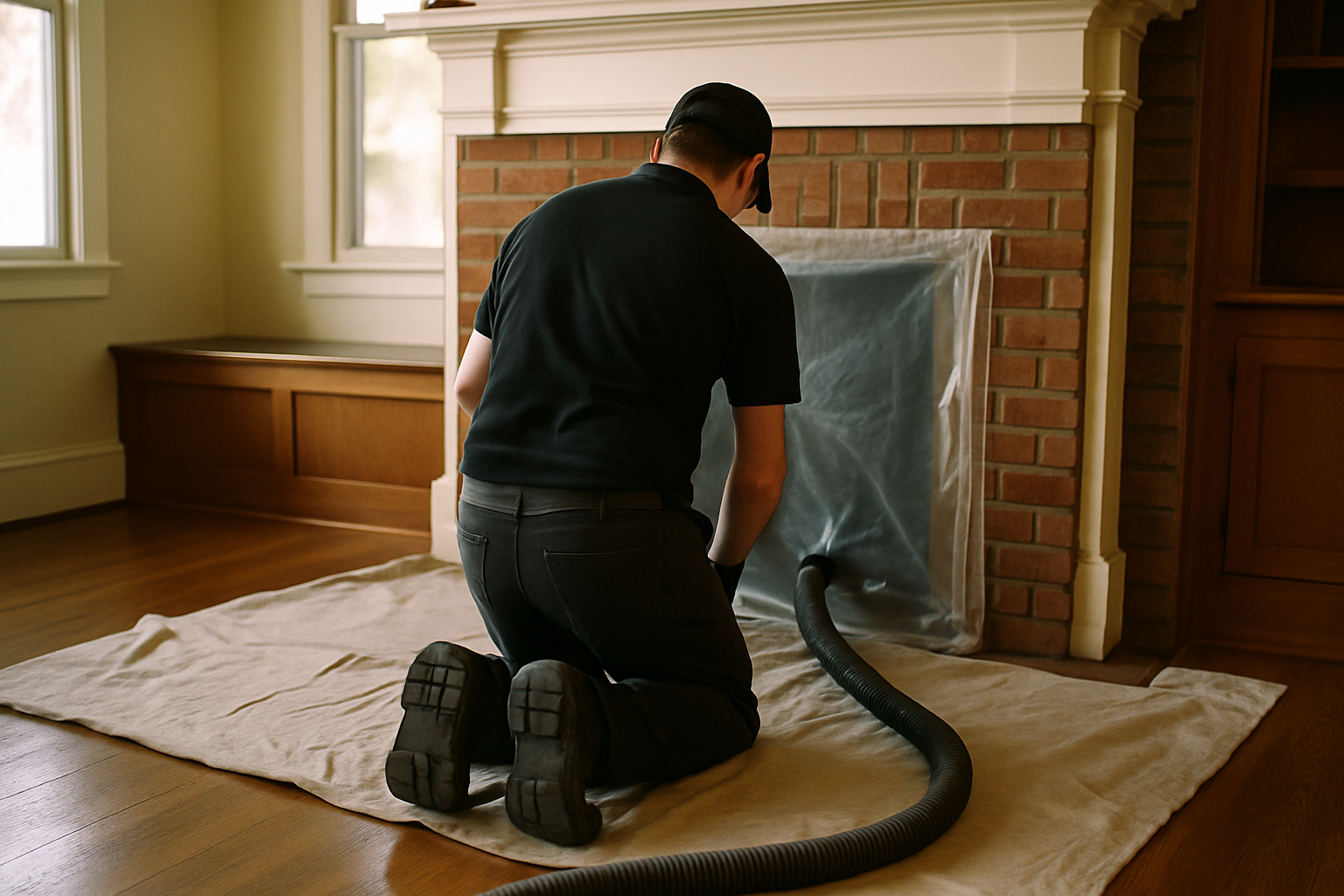
We lay canvas drop cloths in front of the firebox and seal the fireplace opening with a dust barrier before touching anything. Your living room stays clean. We work from both the top of the chimney and from inside the firebox depending on flue access and what we find.
-
Camera inspection, before any brushing
Before brushing anything, we run a camera up the flue to document what is there. Creosote stage, liner cracks, mortar gaps, any offset tiles. We photograph it. That way you see what we saw, not just what we tell you. See our guide on camera findings decoded, cracks, gaps, and offset tiles in chimney flues if you want to know what those images typically show.
-
Brush and vacuum the flue
We use wire chimney brushes sized to your flue diameter, working from the top down. A HEPA vacuum runs continuously at the firebox end to capture soot before it settles. Stage 1 and stage 2 creosote come off cleanly with brushing. Stage 3 glazed creosote requires a chemical treatment applied separately. That costs more and takes a return visit, but it is the only safe way to remove it.
-
Report and recommendations
After cleaning, we walk through the camera footage with you and note anything that needs follow-up: spalling brick, a cracked crown, loose flashing, or a damper that no longer seals. Nothing gets pushed on you. If the chimney is clean and structurally sound, we tell you that too.
Other services we handle in Dallas
Local Conditions
North Texas soil and weather do real damage
01 — Clay soil movement
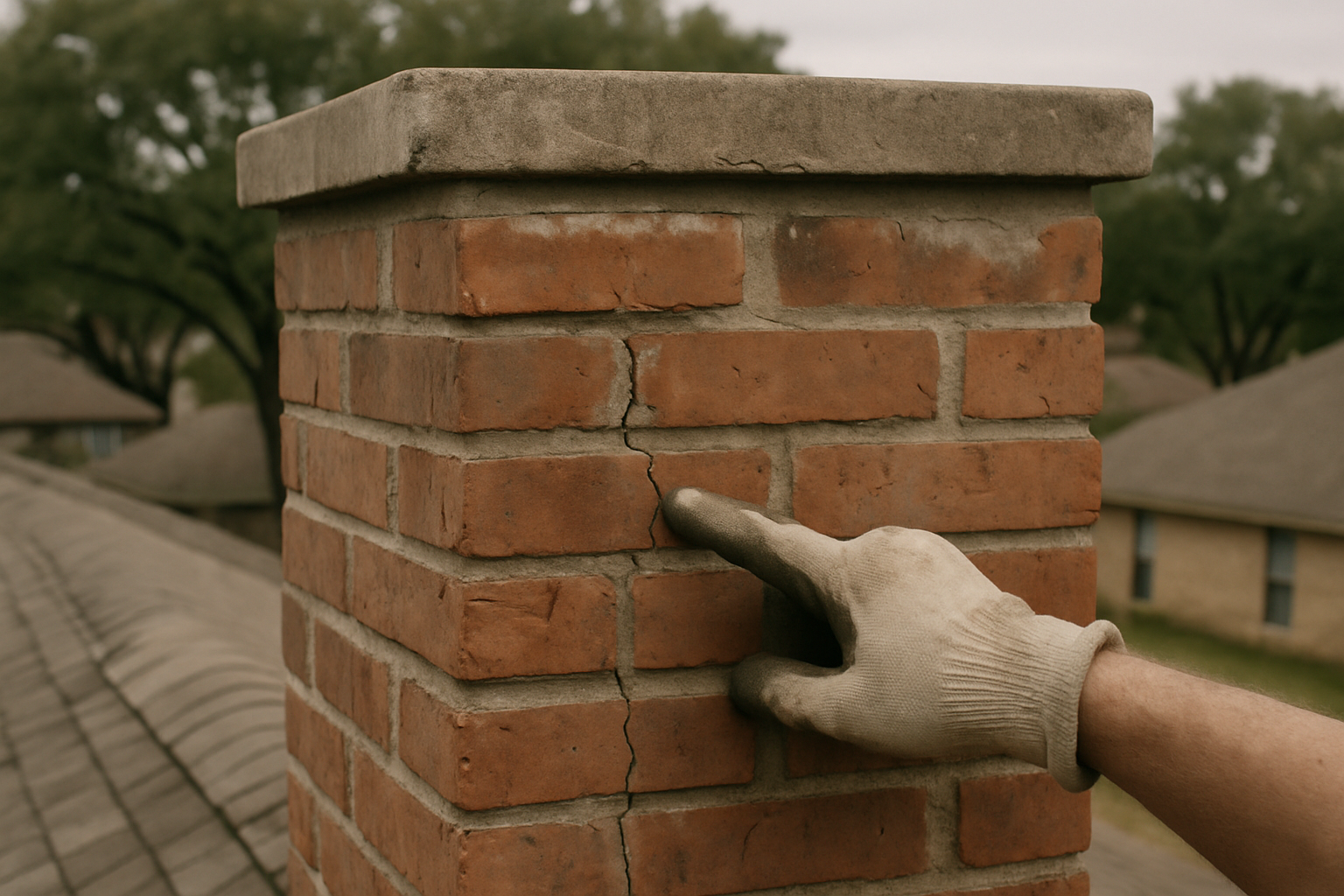
Dallas sits on expansive clay soil. It swells when wet and shrinks when dry. That constant movement stresses the mortar joints in your chimney structure over time. Older homes in Lake Highlands and Lakewood with original brick chimneys are especially prone to mortar deterioration at the base and crown. Read more about how North Texas clay soil can crack your brick chimney. The cracks that result are not cosmetic. Water enters, the liner shifts, and what looked like a minor gap becomes a structural issue.
02 — Freeze-thaw cycles
Dallas winters are mild, but they are not static. Temperatures swing below and above freezing multiple times in a single week during January and February. Water that has entered a crack freezes, expands, and widens the crack. Then it thaws and pulls away. After a few winters of that, hairline cracks become structural cracks. Our guide on hairline cracks vs. structural cracks explains when each type actually warrants action. A chimney crown in good condition stops most of that water before it starts. If yours is flaking or has gaps, that problem compounds every winter. See our breakdown on chimney crown rebuilding and freeze-thaw protection.
03 — Creosote in a mild-winter climate
Because Dallas winters are mild, most homeowners use their fireplace lightly. Short, low-temperature burns actually produce more creosote per fire than longer, hotter ones. A fireplace burned at too-low a temperature for an hour builds up stage 2 creosote faster than you would expect. Pecan and oak are both common in Dallas yards and they are both good firewood choices, but hardwoods still leave deposits. Oak burns cleaner than softwood, but it still needs sweeping. Pecan is similar. Burning green or wet wood of any species makes things much worse. If you are cutting wood from your own yard, let it season for at least a year before burning it.
04 — Storm debris and summer damage
Dallas gets significant storm activity from spring through early fall. Wind-driven debris, hail, and standing water between uses all affect the chimney while you are not looking at it. A chimney cap that takes hail damage in June lets water in all summer long. By October when you want a fire, the liner may already have water damage. Our article on Dallas weather and your chimney cap goes deeper on this. Flashing problems are another common source. Early leak signs are easy to miss. Our guide on early leak signs your chimney flashing gives off can help you catch them before staining appears.
Frequency
How often does a Dallas chimney need cleaning?
It depends on your fuel type and how often you actually burn. These are the benchmarks we follow.
1×
Per year, wood burning
If you burn wood regularly through the fall and winter, book it once a year before the season starts. NFPA 211 calls for an annual inspection of wood-burning systems, with cleaning and repair carried out as that inspection indicates.
2×
Per year, heavy burning
If you burn 3 or more fires per week throughout the season, or if you are burning green wood, consider cleaning mid-season and again at the end. Creosote accumulation accelerates with higher use volume.
3yr
Gas fireplace minimum
Gas fireplaces produce little to no creosote, but the flue and chimney structure still need periodic inspection. Debris, bird nests, and mortar deterioration happen regardless of what fuel you burn. Every 3 years is a reasonable minimum for gas-only units in Dallas.
Pecan and oak: Dallas's most common firewood
Both pecan and oak are hardwoods. Hardwoods burn hotter and cleaner than softwoods like pine. That is good for creosote reduction. But "cleaner" does not mean "no residue." A full season of oak fires still leaves enough soot and creosote to warrant cleaning before the next season starts.
The bigger issue in Dallas is moisture content. Many homeowners burn wood they cut themselves or sourced locally that has not dried long enough. Wood needs to season for 12 months minimum. Burning wet wood at low temperature is the fastest route to stage 2 or stage 3 creosote, regardless of species.
Our detailed breakdown of how often to clean a chimney for wood-burning vs gas fireplaces in Dallas covers the specifics if you want to dial in your schedule.
Inspection levels explained
LEVEL 1
Visual check of accessible parts. Standard for a normally functioning chimney with no changes made to the appliance.
LEVEL 2
Includes camera inspection of the full flue length. Required after a chimney fire, change in fuel type, or real estate transaction.
Wondering what it costs? See our chimney inspection cost guide and chimney sweeping cost guide for Dallas.
Common Questions
What Dallas homeowners actually ask
Straight answers to the three questions we hear most in Dallas, Oak Cliff, Lakewood, and Lake Highlands.
How often should I clean my chimney given Dallas's mild winters?
Once a year before burning season is the right interval for most Dallas homeowners who burn wood occasionally. NFPA 211 calls for an annual inspection regardless of use level, with cleaning carried out as that inspection indicates. The reasoning: it is easier to catch a small problem once a year than to discover a large one after years of skipping it. For gas fireplaces, every 3 years is workable as long as you do not notice draft problems or debris issues in between. If you burned through multiple cords of wood last winter, consider cleaning mid-season and again before next season starts. Mild winters do not mean the chimney is off the hook. Low-temperature fires in a cold flue actually build creosote faster than longer, hotter fires in a fully warmed flue.
Does burning pecan or oak affect how often I need cleaning?
Both pecan and oak are excellent firewood choices by species. They burn hot and dense, which is better for your flue than softer woods. But the moisture content of what you are burning matters more than the species. If you are cutting wood from a pecan tree in your backyard and burning it the same fall, it is too wet. Wet wood smolders at low temperature and deposits creosote quickly. Let it season for at least a year before burning. Properly seasoned oak or pecan that is burned in hot, complete fires will leave less creosote than unseasoned softwood. That said, even good wood burned properly still needs an annual cleaning. The flue still accumulates soot, and the chimney structure still needs a visual check every year.
What does a chimney cleaning appointment look like from start to finish?
We arrive with a truck stocked for the full job. Setup takes about 10 minutes: drop cloths, dust barrier across the firebox opening, tools. Then we run the camera before brushing anything. That baseline inspection tells us what we are dealing with and lets you see the condition of your liner before and after cleaning.
Brushing and vacuuming the flue takes 30 to 90 minutes depending on flue height and the amount of buildup. Most single-story Dallas homes with a straight flue are on the shorter end of that range. Taller homes or those with offsets take longer. While the flue is being brushed, we also check the damper, firebox walls, and smoke shelf.
After cleaning, we walk through what we found. If there is nothing to fix, we say so and you are done. If we find something that needs follow-up, such as a cracked tile in the liner or a deteriorating crown, we explain what it is, why it matters, and what the options are. No pressure. Total appointment time for most Dallas homes runs 2 to 4 hours from arrival to departure.
Safe Flue also covers chimney sweep services in Saginaw and surrounding DFW communities. The same approach, the same crew, no differences in service quality based on location.
Ready to book a cleaning?
We work in Preston Hollow, Oak Cliff, Lake Highlands, Bishop Arts, Lakewood, and throughout the Dallas area. Appointments available on weekdays and Saturdays.
Every cleaning includes
- Drop cloths and a sealed dust barrier before we start
- Camera inspection of the full flue, before brushing
- Brush and HEPA vacuum, top down
- Walkthrough of the footage and any findings
Tuckpointing vs. repointing vs. rebuild
If we find mortar damage during your cleaning, understand what repair level actually fits the damage.
Compare the optionsClass-A pipe vs. B-vent
Not sure which liner or vent type your system uses? This guide explains the difference clearly.
Read the breakdownWhen to replace a chimney pipe
Rust, draft loss, and leaks are all signs. Know when a repair is enough and when replacement is the right call.
See the signsSafe Flue Chimney Sweep and Repair handles chimney cleaning, inspection, repair, and rebuilding across Dallas and the surrounding DFW area. If you found this page through a search for chimney cleaning in Dallas, the full range of our services is on our Dallas chimney cleaning and repair home page.
© 2026 Safe Flue Chimney Sweep And Repair. Dallas, TX.